Introduction
Amazon retail arbitrage remains one of the easiest ways for beginners to start an online business with a relatively low investment. The strategy involves buying discounted products from local retail stores or clearance sales and reselling them on Amazon for a profit. In 2026, advanced sourcing apps, real-time price tracking, and Amazon’s massive customer base continue to make retail arbitrage a popular side hustle for students, entrepreneurs, and anyone looking to generate extra income.
In this complete beginner’s guide, you’ll learn how Amazon retail arbitrage works, how to find profitable products, calculate potential profits, avoid common mistakes, and understand the latest Amazon policies. Whether you’re aiming for a part-time income or planning to build a full-time eCommerce business, this guide will help you get started with confidence and maximize your earning potential in 2026.
What Is Amazon Retail Arbitrage and How Does It Work?
Amazon retail arbitrage works on a simple principle: price differences exist between retail stores and Amazon, and you can profit from that gap. A product might sell for $8 at a Walmart clearance section and list for $22 on Amazon. After Amazon fees and shipping costs, a seller could net $7 to $9 profit per unit. Buy 20 units and you have made $140 to $180 from a single clearance find.
The process flows in a consistent pattern. You visit retail stores, scan product barcodes using a sourcing app, check the Amazon price and sales rank, calculate your potential profit margin, buy the inventory, and then send it to Amazon using the Fulfillment by Amazon program or ship it directly to customers yourself.
Amazon retail arbitrage differs from private label selling, where you create your own branded product, and from wholesale, where you buy directly from manufacturers or distributors. With retail arbitrage, you are working with existing branded products that already have Amazon listings, customer reviews, and sales history. You are not building a brand. You are identifying and filling price gaps in an existing marketplace.
According to Jungle Scout’s State of the Amazon Seller Report, retail arbitrage accounts for a significant share of third-party Amazon selling activity, with many sellers reporting it as their primary sourcing method for their first year of Amazon sales. It remains one of the most accessible entry points into e-commerce because the barriers to starting are low and the feedback loop is fast.
Why Amazon Retail Arbitrage Still Works in 2024
You might wonder whether Amazon retail arbitrage is still viable given how many sellers are on the platform. The answer is yes, and here is why. Retail stores run clearance sales, seasonal markdowns, and promotional pricing that creates temporary price gaps faster than the market can fully absorb them. New gaps appear every single week.
Amazon has over 300 million active customer accounts. The demand side of the equation is enormous. Products sell constantly. A good seller with strong sourcing skills will always find opportunities because the retail landscape is always changing and not every arbitrage seller covers every store in every market.
I started my first Amazon retail arbitrage experiment with $200 in clearance toys from a local Target. Within three weeks I had turned that $200 into $480 in Amazon sales. The margins were not huge on every item, but the proof of concept was real. That experience taught me more about sourcing and pricing in those three weeks than any book could have.
The market is competitive, but it is not closed. Retail arbitrage rewards sellers who move fast, source consistently, and price intelligently. Sellers who treat it like a business rather than a side hustle hobby consistently outperform those who dabble.

How to Get Started With Amazon Retail Arbitrage
Getting started with Amazon retail arbitrage is more straightforward than most people expect. You do not need a warehouse. You do not need thousands of dollars. You need a plan, the right tools, and the willingness to actually walk store aisles and test your assumptions with real money.
Step 1: Set Up Your Amazon Seller Account
Your first step is creating an Amazon Seller Central account. Amazon offers two account types. The Individual plan costs nothing monthly but charges $0.99 per sale. The Professional plan costs $39.99 per month with no per-sale fee and is the better choice once you plan to sell more than 40 units per month.
Start with the Individual plan if you want to test the waters with zero commitment. Upgrade to Professional as soon as your volume justifies it. The Professional plan also gives you access to Amazon’s FBA program more seamlessly and unlocks additional selling tools.
Step 2: Download a Sourcing App
A sourcing app is the single most important tool in Amazon retail arbitrage. It allows you to scan a product barcode in a retail store and instantly see the current Amazon price, sales rank, estimated profit, and competitive landscape. Without it, you are guessing. With it, you are making data-driven purchasing decisions in seconds.
The most popular sourcing apps for Amazon retail arbitrage include:
- Scoutify 2: Built by InventoryLab, extremely reliable, and integrates directly with your Amazon selling account for seamless purchasing records.
- Amazon Seller App: Free and built by Amazon itself. Great for beginners who want to start without paying for a third-party tool. Less feature-rich than dedicated sourcing apps but entirely functional.
- Profit Bandit: Popular choice that includes a clear profit calculation and an easy-to-read interface. Good for new sellers who want simplicity.
- Keepa: Not primarily a scanning app, but an essential companion tool that shows Amazon price history and sales rank history. Helps you verify that a product actually sells at its current price consistently.
Step 3: Set a Starting Budget and Stick to It
Most experienced Amazon retail arbitrage sellers recommend starting with $200 to $500 for your first sourcing trip. This gives you enough buying power to test multiple products without risking significant capital if you make early mistakes. Your goal at the start is not to maximize profit. It is to learn the process and validate your approach.
Reinvest your profits from early sales into your next sourcing run. This compounding approach is how most successful retail arbitrage sellers grow their inventory without needing outside capital. Discipline with your budget, especially in the early months, is what separates sellers who scale from those who stagnate.
Where to Source Products for Amazon Retail Arbitrage
The quality of your sourcing determines the quality of your business. Amazon retail arbitrage sellers draw from a wide range of retail environments, and each one has its own strengths. Diversifying your sourcing across multiple store types protects you from relying too heavily on any single opportunity.
Big Box Retail Stores
- Walmart: The clearance sections, rollback deals, and seasonal markdown aisles at Walmart are among the most productive sourcing locations for retail arbitrage sellers. Toy clearance after the holidays and seasonal items before the transition are particularly strong.
- Target: Target’s clearance system marks items down in predictable cycles, often 30 percent, then 50 percent, then 70 percent off. Learning Target’s markdown schedule in your area is one of the fastest ways to find consistent arbitrage opportunities.
- Home Depot and Lowe’s: Home improvement and hardware items often have seasonal clearance that creates strong Amazon opportunities, particularly in garden, outdoor living, and holiday lighting categories.
- Kohl’s: Kohl’s promotional structures and regular sale events create recurring arbitrage windows, especially in kitchen, personal care, and toy categories.
Discount and Outlet Stores
- TJ Maxx and Marshalls: Both stores receive irregular inventory at reduced prices, which creates unpredictable but often excellent arbitrage windows for health, beauty, home, and branded goods.
- Big Lots: A strong source for seasonal items, home goods, and branded consumer products at below-market prices.
- Dollar General and Dollar Tree: Certain health and beauty products, cleaning supplies, and seasonal items from dollar stores can carry surprisingly strong Amazon margins.
- Grocery store closeouts: Local grocery chains frequently discount grocery, health, and beauty items that carry good Amazon rankings and strong price gaps.
How to Evaluate Whether a Product Is Worth Buying
Not every deal that looks good on the surface is actually profitable. Evaluating a potential Amazon retail arbitrage purchase requires checking several variables at once. Here is the framework I use when scanning products in store aisles.
The Core Profit Calculation
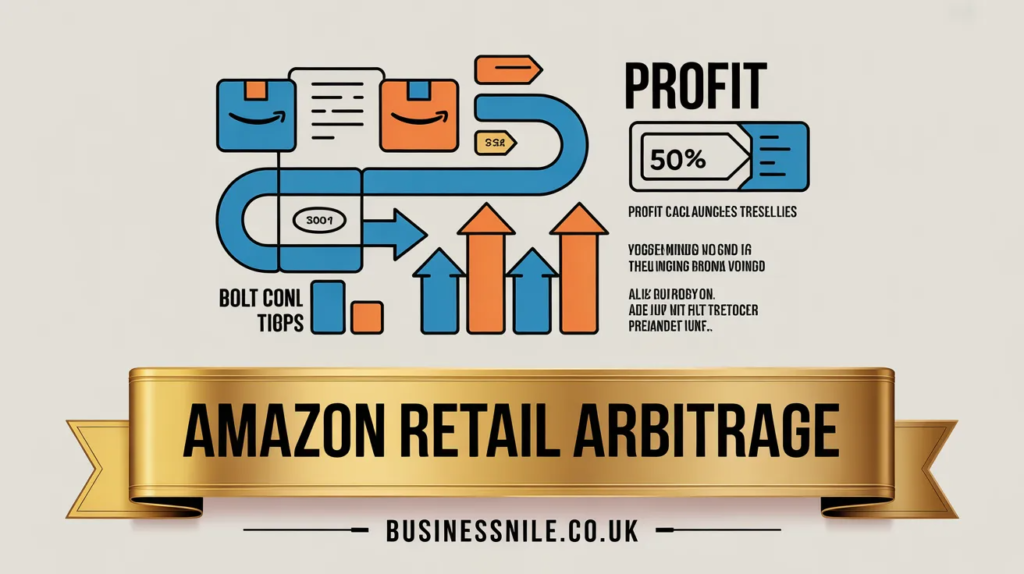
Your profit on each unit equals the Amazon selling price minus the Amazon referral fee, minus the FBA fee if you use Fulfillment by Amazon, minus your cost of goods, minus any prep or shipping costs. Amazon’s referral fee is typically 8 to 15 percent of the selling price depending on the product category. FBA fees cover storage and fulfillment and vary by product size and weight.
Most experienced Amazon retail arbitrage sellers target a minimum profit margin of 30 percent return on investment per unit, with many preferring 50 percent or higher for items they buy in quantity. A sourcing app calculates this automatically when you scan, which is another reason having one is non-negotiable.
Understanding Amazon Sales Rank
Amazon assigns every product a Best Seller Rank within its category. A lower number means the product sells more frequently. A rank of 500 in Toys means that product is one of the best-selling toys on Amazon. A rank of 500,000 means it sells rarely. You want to buy products that actually sell before your capital gets tied up in slow-moving inventory.
General guidelines for sales rank thresholds vary by category. In Toys, many experienced sellers target ranks below 100,000 for comfort. In Home and Kitchen, acceptable ranks can extend to 300,000 because the category is enormous and even slower-ranked products sell regularly. Learn the category-specific rank benchmarks for the categories you source most heavily. Amazon retail arbitrage
Checking Competition Before You Buy
Before buying, check how many other sellers are offering the same product on Amazon. A listing with 15 FBA sellers competing for the buy box creates a race to the bottom on price. A listing with two or three sellers leaves more room for sustainable pricing. Avoid situations where you will clearly be the 20th FBA seller on a listing unless the volume is high enough to support everyone.
Also check whether Amazon itself is a seller on the listing. If Amazon is selling the same product, they almost always win the buy box at competitive prices, which can effectively shut out third-party FBA sellers or force prices so low that your margin disappears. Seeing Amazon as a seller on a listing is generally a reason to skip that product.
FBA vs FBM: Which Should You Use for Retail Arbitrage?
When you sell on Amazon, you can fulfill orders yourself, which Amazon calls Fulfilled by Merchant or FBM, or you can send your inventory to Amazon’s warehouses and let Amazon handle all storage, picking, packing, shipping, and customer service, which is Fulfillment by Amazon or FBA. For Amazon retail arbitrage sellers, FBA is typically the preferred route, and here is why.
- FBA products are Prime eligible, which dramatically increases conversion rates and the likelihood of winning the buy box.
- FBA removes the burden of daily shipping from your schedule, allowing you to focus time on sourcing rather than packing boxes.
- Amazon handles customer returns and service questions for FBA orders, significantly reducing your operational workload.
- FBA fees are predictable and manageable when you build them into your profit calculation before purchasing inventory.
FBM makes sense for oversized items where FBA fees would be prohibitive, for items with very high margins that justify the time cost, or during peak holiday periods when FBA inventory deadlines make sending stock to warehouses difficult. Most new Amazon retail arbitrage sellers start with FBA and stay with it.
Common Amazon Retail Arbitrage Mistakes to Avoid
Every new Amazon retail arbitrage seller makes mistakes. The goal is to make small ones early and learn from them before they cost you real money. These are the mistakes I see most often from sellers who struggle to get consistent results.
- Ignoring sales rank history: A product might have a great sales rank today but have been consistently ranked much higher for the past six months. Keepa’s price and rank history charts reveal whether the current rank is a fluke or a consistent pattern. Always check history before buying quantity.
- Overbuying before testing: Buying 50 units of a product you have never sold before is a fast way to end up with dead inventory. Test with 3 to 5 units first. Confirm that the product sells at your target price before committing to larger quantities.
- Ignoring IP and brand restrictions: Some brands actively restrict third-party sellers from listing their products on Amazon. Before buying inventory of a well-known branded product, verify that there are no brand restrictions or intellectual property complaints on that listing.
- Chasing price instead of velocity: A product with a 200 percent profit margin means nothing if it takes 18 months to sell. Focus on products that sell fast enough to turn your capital over multiple times per year.
- Failing to account for all fees: New sellers frequently forget to include FBA storage fees, return processing fees, and long-term storage fees in their calculations. A product that looks profitable at the moment of purchase can quietly erode your margins if it sits in FBA warehouses too long.
- Not tracking results: You need a system for tracking what you bought, what you paid, what you sold it for, and what your actual net profit was. Without this data, you cannot identify which sourcing locations and product categories are working best for you.
How to Scale Your Amazon Retail Arbitrage Business
Once you understand the process and are consistently finding profitable products, scaling your Amazon retail arbitrage operation becomes about systems, efficiency, and capital allocation. Here are the strategies that the most successful retail arbitrage sellers use to grow their businesses beyond the first few hundred dollars of monthly profit.
- Expand your sourcing geography: As you get comfortable with local stores, explore neighboring towns and cities. Different markets have different clearance cycles and inventory, and expanding your territory multiplies your sourcing opportunities.
- Add online arbitrage to your mix: Online arbitrage applies the same concept to online retailers. You buy discounted products from websites like Walmart.com, Target.com, or specialty retailers and send them to FBA. This removes the need to physically visit stores and opens up nationwide sourcing.
- Hire a prep center: As your volume grows, the time spent receiving, labeling, and boxing inventory for FBA becomes a bottleneck. Third-party prep centers receive your store-bought inventory, prepare it to Amazon’s standards, and ship it to FBA warehouses on your behalf.
- Use sourcing leads services: Several subscription services curate daily lists of profitable online arbitrage deals based on scanning thousands of products automatically. Services like Tactical Arbitrage, OA Deals, and Leads lists can dramatically accelerate your finding process.
- Reinvest consistently: The compounding effect of reinvesting all profits back into inventory is the most powerful growth lever in retail arbitrage. Sellers who discipline themselves to reinvest rather than withdraw profits in the first six to twelve months typically reach significant monthly revenue much faster than those who do not.
Final Thoughts: Is Amazon Retail Arbitrage Worth It?
Amazon retail arbitrage is one of the most accessible and proven entry points into e-commerce available today. It requires minimal startup capital, produces fast feedback on your decisions, and scales predictably when you apply consistent effort and smart sourcing habits. It is not a passive income machine. It is a real business model that rewards people who treat it seriously.
The keys to success in Amazon retail arbitrage are finding reliable sourcing locations, mastering your profit calculations, understanding sales rank and pricing history, avoiding the most common early mistakes, and reinvesting your profits to grow your capital base over time. None of these skills are complicated. All of them are learnable.
Start small, stay disciplined, and let your results teach you. The sellers who succeed at Amazon retail arbitrage long term are not necessarily the ones who started with the most money. They are the ones who paid attention, adapted fast, and kept showing up to source even when early results were imperfect.
What is the biggest challenge you are facing right now with Amazon retail arbitrage? Drop it in the comments below. And if this guide helped you see a clearer path forward, share it with someone who is still on the fence about getting started. They will thank you for it.
FAQs: Amazon Retail Arbitrage
1. Is Amazon retail arbitrage legal?
Yes, Amazon retail arbitrage is completely legal. It is protected under the first-sale doctrine in the United States, which allows a buyer of a legally purchased product to resell that product. You are buying products at retail and reselling them, which is a normal commercial activity. Some individual brands have restricted seller programs on Amazon, but the practice itself is entirely lawful.
2. How much money do I need to start Amazon retail arbitrage?
Most experienced sellers recommend starting with $200 to $500 for your first sourcing run. You also need an Amazon seller account, which is free at the Individual level or $39.99 per month for the Professional plan. A sourcing app subscription costs between $10 and $40 per month. You can realistically start Amazon retail arbitrage for under $300 in total initial investment.
3. What is the best sourcing app for Amazon retail arbitrage?
The Amazon Seller App is free and a solid starting point for beginners. Scoutify 2 and Profit Bandit are popular paid options with more features and better profit calculations. Keepa is an essential companion tool for checking price and sales rank history. Most serious Amazon retail arbitrage sellers use a combination of a scanning app and Keepa together.
4. What profit margin should I target in retail arbitrage?
Most experienced Amazon retail arbitrage sellers target a minimum of 30 percent return on investment per unit as their threshold for buying. Many prefer 50 percent or higher for items they plan to buy in larger quantities. Below 25 percent ROI, the margin for error becomes very thin when you factor in potential price drops, returns, and storage fees.
5. Should I use FBA or FBM for retail arbitrage?
Most retail arbitrage sellers use Fulfillment by Amazon because FBA products are Prime-eligible, which increases sales velocity and buy box win rates. FBA also eliminates the daily task of packing and shipping individual orders. Fulfilled by Merchant makes sense for oversized items or products with very high margins, but FBA is the default choice for most retail arbitrage inventory.
6. What are the best stores for retail arbitrage sourcing?
Walmart, Target, Home Depot, Lowe’s, TJ Maxx, Marshalls, Kohl’s, Big Lots, Dollar General, and grocery store chains with active clearance programs are all strong sourcing locations. Walmart and Target clearance sections are consistently the most productive starting points for new Amazon retail arbitrage sellers because of their predictable markdown cycles.
7. What products sell best through Amazon retail arbitrage?
Toys, health and beauty products, household goods, kitchen items, and seasonal products are among the most consistently profitable categories for retail arbitrage sellers. Branded products with strong existing Amazon demand and good sales history tend to perform better than generic items. Avoid categories with high return rates or excessive competition from Amazon itself.
8. Can Amazon retail arbitrage be done online?
Yes. Online arbitrage applies the same concept to retail websites. You buy discounted products from sites like Walmart.com, Target.com, or specialty retailers and resell them on Amazon. Online arbitrage allows nationwide sourcing without physical store visits. Tools like Tactical Arbitrage and Jungle Scout help automate the product discovery process for online arbitrage.
9. How long does it take to make money with Amazon retail arbitrage?
Many new sellers make their first Amazon sale within one to two weeks of sending their first FBA shipment. Building to a consistent $500 to $1,000 monthly profit typically takes two to four months of active sourcing and learning. Reaching $3,000 to $5,000 monthly profit usually takes six months to a year for sellers who source consistently and reinvest their earnings.
10. What are the biggest risks in Amazon retail arbitrage?
The primary risks include buying products that are restricted or have intellectual property complaints, buying inventory that does not sell before FBA storage fees accumulate, price competition that erodes your margins after you have already purchased inventory, and Amazon changing policies or category requirements that affect your listings. Careful research before every purchase and starting with small test quantities mitigates most of these risks effectively.
Also Read In BusinessNile.co.uk
Email: johanharwen314@gmail.com
Author Name: Hamid Ali
About the Author: Hamid Ali is an e-commerce writer, Amazon seller educator, and digital business strategist with over twelve years of hands-on experience building and scaling online retail operations. He has helped hundreds of new sellers navigate their first steps in Amazon FBA, retail arbitrage, and online arbitrage through practical, no-nonsense guidance that prioritizes real results over theory. Hamid started his own Amazon retail arbitrage journey with a modest budget and a lot of curiosity, and he brings that grounded perspective to everything he writes. He believes that the best business advice comes from people who have actually done the work, made the mistakes, and figured out what actually moves the needle.