What Is HR Outsourcing?
HR outsourcing is the practice of hiring an external provider to manage some or all human resource responsibilities for a business. Instead of maintaining an internal team for every HR function, a company can outsource tasks such as payroll processing, employee benefits administration, recruitment, compliance, onboarding, and workforce management.
The scope can be narrow or broad. A small company might outsource only payroll and tax administration, while a growing organization could use outsourced HR services for recruiting, employee relations, benefits, HR technology, and compliance.
The main objective is not simply to reduce costs. Effective human resource outsourcing can give a company access to specialized HR expertise, technology, and processes while allowing internal leaders to concentrate on customers, operations, and business growth.
How Does HR Outsourcing Work?
HR outsourcing usually begins by identifying which HR functions are consuming internal time or require specialized expertise. The company then evaluates HR service providers, compares their services and pricing, and signs an agreement defining responsibilities.
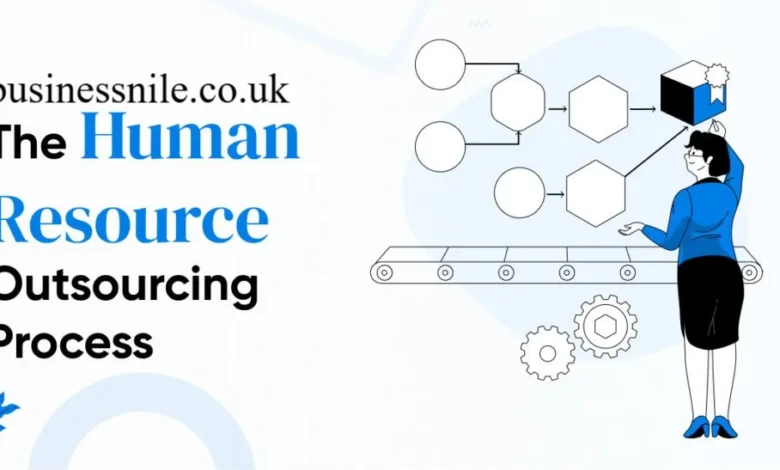
A typical process looks like this:
- Identify HR needs: Determine which administrative or strategic functions should be outsourced.
- Compare providers: Evaluate experience, services, technology, security, pricing, and customer support.
- Define responsibilities: Establish which tasks remain with the company and which are transferred to the provider.
- Integrate systems: Connect payroll, employee records, benefits, time tracking, and other HR technology.
- Transition operations: Transfer relevant information and establish workflows.
- Monitor performance: Review service levels, compliance, accuracy, response times, and employee feedback.
The exact arrangement depends on the provider and the services selected. HR outsourcing can therefore function as a flexible support model rather than a complete replacement for an internal HR department.

What Are the Main Benefits of HR Outsourcing?
The biggest benefits include access to expertise, lower administrative workload, better HR processes, technology access, and more time for strategic work.
1. Cost Savings and Overhead Reduction
Maintaining an in-house HR department can involve salaries, benefits, software, training, compliance resources, and administrative infrastructure. Outsourcing selected functions can reduce some of these expenses.
However, cost savings should not be the only consideration. A cheaper provider may offer fewer services, weaker support, or limited technology. Businesses should compare the total value of each solution.
2. Access to Specialized HR Expertise
Employment laws, payroll requirements, benefits administration, and workplace policies can become complicated as a company grows.
An experienced provider can give businesses access to HR professionals who specialize in areas such as:
- Payroll and tax administration
- Employment compliance
- Employee relations
- Recruitment
- Benefits administration
- Workplace policies
- Risk management
- Employee training
3. Better HR Technology
Many HR outsourcing companies use HR technology solutions for payroll, employee records, time tracking, benefits, reporting, and workforce management.
This can give smaller companies access to systems that might otherwise require significant software investments.
4. More Time for Strategic Work
Outsourcing repetitive administrative tasks allows managers and internal HR professionals to spend more time on employee engagement, talent management, performance management, skills development, and workforce planning.
SHRM has highlighted administrative workload, payroll, leave administration, and changing compliance requirements as areas that can make HR outsourcing attractive to businesses.
5. Improved Employee Support
A well-managed HR service can make processes such as onboarding, payroll inquiries, benefits enrollment, and employee documentation more organized.
The result can be a smoother employee experience, although service quality depends heavily on the provider and the agreement.
What HR Functions Can You Outsource?
Businesses can outsource almost any HR function that can be clearly defined and managed through an external service relationship.
Common outsourced HR functions include:
| HR Function | Typical Outsourced Activities |
|---|---|
| Payroll | Payroll processing, tax calculations, reporting |
| Benefits | Enrollment, eligibility, benefits administration |
| Recruitment | Candidate sourcing, screening, scheduling |
| Onboarding | Documentation, orientation, new-hire setup |
| Compliance | Policy reviews, regulatory support, documentation |
| Time Management | Time tracking, attendance and leave administration |
| Training | Employee training and skills development |
| HR Administration | Records, documents and employee data |
| Technology | HR software implementation and support |
| Consulting | HR strategy, policies and workforce planning |
Payroll Administration and Tax Management
Payroll is one of the most commonly outsourced HR functions. Providers may calculate wages, process payments, prepare payroll reports, manage certain tax filings, and assist with year-end documentation.
In the United States, however, outsourcing payroll does not automatically remove the employer’s responsibilities. The IRS states that employers generally remain responsible for federal employment tax obligations even when a third-party payroll provider handles payroll duties.
Businesses should therefore verify that their provider has appropriate controls and that tax deposits and filings are being handled correctly.
The IRS also recommends that employers monitor federal tax deposits when using third-party payroll services.
Employee Benefits and HR Administration
Benefits administration can include healthcare plans, retirement plans, insurance, enrollment, eligibility checks, employee records, and related communications.
Outsourcing these tasks can reduce administrative work and help businesses organize employee information more efficiently.
It is especially useful when a company is growing and its benefits program becomes more difficult to manage manually.
Talent Acquisition and Onboarding Support
Recruitment outsourcing can help companies manage parts of the hiring process, including:
- Writing job descriptions
- Candidate sourcing
- Resume screening
- Interview coordination
- Reference checks
- New-hire documentation
- Employee onboarding
The best approach depends on the business. Some companies outsource administrative recruitment activities while keeping final hiring decisions and employer branding in-house.
Regulatory Compliance and Risk Management
HR outsourcing can support compliance, but businesses should not assume that hiring an outside provider eliminates their legal responsibilities.
HR providers may help businesses understand employment laws, maintain documentation, develop HR policies, administer leave programs, and identify compliance risks.
This is particularly valuable when businesses operate across multiple states or have complicated workforce requirements.
For U.S. employers, compliance responsibilities can involve federal, state, and local requirements. The specific rules depend on factors such as location, workforce size, industry, and employment practices.
Learning and Employee Development
Outsourced HR services can also support employee training, performance evaluations, leadership development, and skills development.
This allows a business to access specialized training resources without building every program internally.
The strongest arrangements connect training with business goals rather than treating employee development as an isolated HR activity.
What Types of Companies Use HR Outsourcing?
HR outsourcing can be useful for small businesses, growing companies, startups, and larger organizations, but the reason for outsourcing differs by company size.
Small Businesses
Small businesses may lack dedicated HR professionals and therefore outsource payroll, benefits, recruitment, compliance, and employee administration.
Growing Companies
As headcount increases, HR operations can become more complex. Growing companies may outsource specific functions while keeping an internal HR leader to manage strategy.
Large Organizations
Larger companies may outsource specialized or highly administrative functions while retaining an internal HR department.
The appropriate model depends on internal expertise, workforce complexity, budget, and business objectives.

How to Choose the Right HR Outsourcing Provider
Choosing a provider requires more than comparing monthly prices.
Consider these factors:
- Services: Make sure the provider supports the HR functions you actually need.
- Industry experience: Relevant experience can be valuable for specialized workforce requirements.
- Technology: Review payroll, HRIS, reporting, employee self-service, and integration capabilities.
- Security: Ask how employee data is stored, accessed, protected, and backed up.
- Compliance support: Understand exactly what the provider does and what remains your responsibility.
- Customer support: Check response times, account management, and escalation procedures.
- Pricing: Understand setup fees, per-employee charges, minimums, and additional service costs.
- Contract terms: Review renewal, cancellation, liability, data ownership, and service-level provisions.
- Scalability: Make sure the provider can support your company as it grows.
A written agreement should clearly define responsibilities, deliverables, service standards, data handling, and escalation procedures. Vendor governance is important because outsourcing works best when the client actively manages the relationship rather than simply handing over responsibility.
Tips for Successfully Outsourcing HR
Follow these practices to make the transition smoother:
- Start with the HR functions creating the biggest workload.
- Define responsibilities before implementation.
- Keep important HR decision-making under appropriate internal control.
- Establish measurable service standards.
- Protect employee data and limit unnecessary access.
- Train managers on the new HR processes.
- Review provider performance regularly.
- Monitor payroll and tax-related activity.
- Maintain clear communication with employees.
- Reassess the arrangement as the business grows.
The goal should be to create a partnership that improves HR operations rather than simply transferring administrative tasks to another company.
HR Outsourcing vs. PEO: What Is the Difference?
Traditional HR outsourcing and a Professional Employer Organization (PEO) are related but not identical arrangements.
With traditional HR outsourcing, a provider may handle specific services such as payroll, recruitment, benefits administration, or compliance support while the business generally remains the employer.
A PEO arrangement can involve a broader employment relationship and shared employer responsibilities. The exact legal and tax treatment depends on the arrangement.
The IRS recognizes PEOs as a type of third-party payer and notes that certain Certified Professional Employer Organization (CPEO) arrangements can change federal employment tax responsibilities.
Businesses should therefore understand the legal structure before choosing between an HR outsourcing provider and a PEO.
What Are the Disadvantages of HR Outsourcing?
HR outsourcing can create challenges if the provider is poorly selected or the relationship is not managed effectively.
Potential disadvantages include:
- Less direct control over certain HR processes
- Communication delays
- Vendor dependency
- Data security concerns
- Unexpected fees
- Service-quality problems
- Integration difficulties
- Reduced personal interaction with employees
- Confusion about compliance responsibilities
These risks can be reduced through careful provider selection, clear contracts, data-security requirements, and regular performance reviews.
Frequently Asked Questions About HR Outsourcing
What Are the Types of HR Outsourcing?
Common types include payroll outsourcing, recruitment outsourcing, benefits administration, compliance support, HR consulting, HR technology services, employee training, and comprehensive HR management outsourcing.
When Should a Company Outsource HR?
A company should consider outsourcing when HR administration is consuming too much internal time, specialized expertise is unavailable, compliance requirements are becoming difficult to manage, or the business needs scalable HR technology and support.
Is HR Outsourcing Suitable for Small Businesses?
Yes. Small businesses can outsource selected HR functions such as payroll, benefits, recruitment, and compliance instead of building a large internal HR operation.
What Is an HR Outsourcing Company?
An HR outsourcing company is an external provider that performs agreed HR functions for another organization. Its services can range from one specialized function to broad HR administration.
What Does an HR Outsourcing Provider Do?
Depending on the contract, a provider may manage payroll processing, employee benefits, recruitment, onboarding, compliance support, HR administration, training, workforce management, or HR technology.
How Much Does HR Outsourcing Cost?
There is no single standard price. Cost depends on employee count, services selected, payroll complexity, location, technology requirements, and provider pricing structure. Businesses should request detailed.

Final Takeaway
HR outsourcing allows businesses to delegate selected human resource responsibilities to external specialists while keeping their attention on core operations and growth. Payroll, benefits, recruitment, onboarding, compliance, training, and HR technology are among the most common areas businesses outsource.
The best outsourcing strategy is not necessarily the one that transfers the most work. It is the one that gives the business the right combination of cost control, specialized HR expertise, technology, compliance support, employee service, and internal control.
For U.S. businesses, payroll and employment-tax responsibilities deserve particular attention. The IRS makes clear that using a standard third-party payroll provider generally does not remove the employer’s responsibility for federal employment taxes.
Businesses should therefore evaluate providers carefully, define responsibilities in writing, protect employee information, and regularly monitor the quality of outsourced HR services.
Important Entities Mentioned
- Internal Revenue Service (IRS)
- Society for Human Resource Management (SHRM)
- Professional Employer Organization (PEO)
- Certified Professional Employer Organization (CPEO)
- Payroll Service Provider (PSP)
Author Bio: Hamid Ali is a business and HR writer covering HR outsourcing, workplace management, and modern business solutions. He focuses on creating clear, practical content that helps businesses make informed decisions.
Author Name: Hamid Ali
Email: johanharwen314@gmail.com
Also Read: