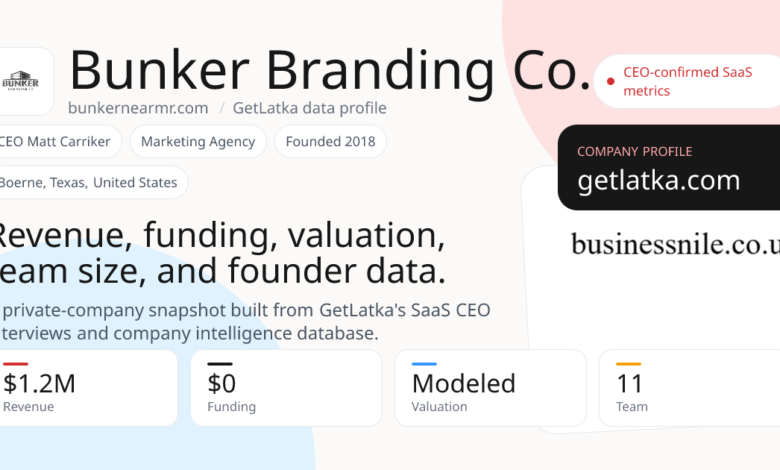
Bunker Branding is a U.S.-based merchandise company best known for helping YouTubers and online creators design, produce, store, and fulfill merchandise. The company was founded around the creator economy by Matt Carriker, the YouTuber behind Demolition Ranch, Off The Ranch, and Vet Ranch.
What began as a way for Carriker to produce merchandise for his own audiences developed into a larger operation serving other creators. A ShipBob case study published in July 2026 reported that Bunker Branding had more than 200,000 SKUs, shipped over 10,000 orders per month, operated from a 12,000-square-foot warehouse, and served more than 90 clients at the time of the case study.
Today, the company’s online store continues to list merchandise from numerous creators and brands, including Demolition Ranch, Pepperbox, Kentucky Ballistics, Ryan McBeth, The Fat Electrician, and others.
What Is Bunker Branding?
Bunker Branding is a merchandise production and fulfillment company designed around social media creators and their audiences.
Its business model goes beyond simply printing T-shirts. The company has built an operation involving:
- Custom apparel
- Screen printing
- Direct-to-garment printing
- Embroidery
- Stickers and accessories
- Inventory storage
- Order processing
- Picking and packing
- Shipping management
- Merchandise fulfillment
- Creator-focused ecommerce operations
The company’s stated mission is to bridge the gap between traditional merchandise companies and social media influencers by allowing creators to have greater involvement in the quality and style of their merchandise.
This approach is particularly useful for creators because merchandise can provide another revenue stream without requiring them to manage every part of production and fulfillment themselves.
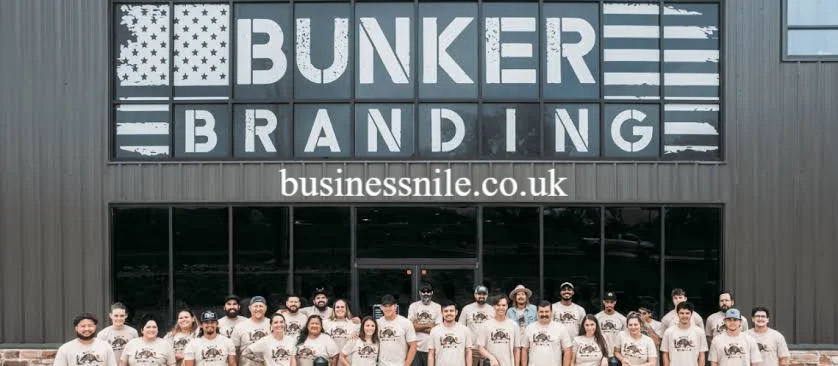
Who Owns Bunker Branding?
Matt Carriker is the founder and owner associated with Bunker Branding. Carriker is an entrepreneur and content creator best known for his YouTube channels, particularly Demolition Ranch.
Bunker Branding’s current Terms of Service identify Bunker Branding Co. LLC as the company operating its website.
Carriker’s connection to the company is important because Bunker Branding was created from a problem he personally experienced as a creator: finding an effective way to produce and distribute merchandise for an online audience.
Rather than continuing to depend entirely on outside vendors, the business eventually brought more merchandise production in-house.
How Did Bunker Branding Start?
The company’s early history is closely connected to Matt Carriker’s YouTube career.
Carriker began creating online videos while working as a veterinarian. His channels eventually grew into large creator brands, creating a substantial audience for merchandise.
According to ShipBob’s case study, Carriker and his wife, Meredith, initially purchased T-shirts from a local company and fulfilled orders from their garage. As demand increased, they brought in additional help and eventually moved toward in-house screen printing. By 2018, the operation was working from a warehouse.
The important business lesson is that Bunker Branding did not begin as a large fulfillment company. It grew from a specific operational problem:
How can a creator consistently produce quality merchandise without losing control over production and customer experience?
That problem eventually became the foundation of a larger merchandise business.
Bunker Branding at a Glance
| Business Detail | Information |
|---|---|
| Company | Bunker Branding Co. |
| Associated founder/owner | Matt Carriker |
| Industry | Creator merchandise and ecommerce |
| Main market | Social media creators and influencers |
| Production | Apparel, printing, embroidery, accessories |
| Reported warehouse | 12,000 sq. ft. |
| Reported SKUs | 200,000 |
| Reported monthly orders | 10,000+ |
| Reported clients | 90+ |
| WMS | ShipBob |
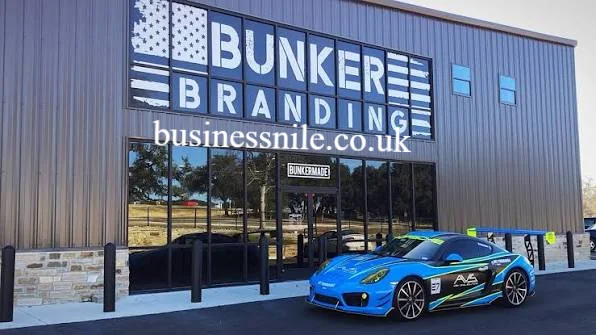
| Location reported in case study | Boerne, Texas |
The operational figures above come from ShipBob’s 2026 case study and describe the business at the time of that case study rather than guaranteeing that every metric remains unchanged today.
Why Did Bunker Branding Need a New Warehouse Management System?
Bunker Branding needed a better warehouse management system because its inventory and order volume had become too complex to manage efficiently using older processes.
The company reportedly tried five different warehouse management systems before adopting ShipBob’s WMS. When previous systems did not work, the team sometimes returned to manually printing orders and picking products from paper lists.
That approach may work for a small operation, but it becomes increasingly difficult when a company has:
- Thousands of products
- Multiple creators
- Different product variations
- Large inventory
- Seasonal demand
- Made-to-stock merchandise
- One-off products
- High order volumes
Bunker Branding needed software capable of supporting both its regular inventory and its customized production workflow.
Why Did Bunker Branding Choose ShipBob WMS?
Bunker Branding chose ShipBob’s warehouse management system because it needed a system capable of handling its unusual mixture of inventory and on-demand production.
According to the case study, approximately 75% of its products were made-to-stock, while around 25% were one-off products created as orders came in.
That distinction matters.
A conventional warehouse might primarily store finished products and ship them when orders arrive. Bunker Branding also needed to support merchandise production, inventory storage, picking, packing, and fulfillment across many different creator brands.
ShipBob helped the company organize its warehouse locations and onboard approximately 200,000 SKUs into the system.
How Does Bunker Branding Manage 200,000+ SKUs?
Managing 200,000 SKUs requires accurate inventory tracking and organized warehouse operations.
The ShipBob case study reported that Bunker Branding had more than 200,000 SKUs on its website, with approximately 190,000 stored in its warehouse at the time of the case study.
For a business of this scale, SKU management becomes much more than counting products.
Each SKU can represent differences in:
- Creator
- Product type
- Size
- Color
- Design
- Inventory location
- Production status
- Order status
The WMS helps connect these details so warehouse employees can locate products and process orders more consistently.
This is one reason inventory accuracy becomes increasingly important as an ecommerce business grows.
How Many Orders Does Bunker Branding Ship?
According to ShipBob’s case study, Bunker Branding was shipping more than 10,000 orders per month.
That volume creates a major operational challenge because order fulfillment is not simply about putting products into boxes.
A typical workflow can involve:
- Receiving the customer order
- Identifying the correct SKU
- Locating inventory
- Picking the product
- Checking the order
- Packing the shipment
- Generating shipping information
- Sending the package to the customer
At higher volumes, even a small fulfillment error rate can create significant customer-service problems.
The company reported an error rate of less than 1% in the ShipBob case study. That figure was supplied by the merchant, and ShipBob specifically noted that it does not independently represent the accuracy of the merchant’s metrics.
What Makes Bunker Branding’s Business Model Different?
The biggest difference is its focus on creators.
Traditional apparel companies generally manufacture products for their own brands or wholesale customers. Bunker Branding instead operates around the needs of content creators who already have audiences.
A creator can focus on:
- YouTube videos
- Social media
- Audience growth
- Brand development
- Sponsorships
- Community engagement
Meanwhile, the merchandise operation can handle much of the physical product process.
Bunker Branding’s current website demonstrates the breadth of this model by featuring products associated with numerous different creators and brands.
Its official “Get Branded” page currently invites creators with 500,000 or more subscribers to apply for merchandise services.
What Products Does Bunker Branding Sell?
Bunker Branding’s catalog includes a broad selection of creator merchandise.
Examples include:
- T-shirts
- Hoodies
- Hats
- Stickers
- Tumblers
- Aprons
- Backpacks
- Other accessories
The current store includes products associated with creators such as Pepperbox, Kentucky Ballistics, Ryan McBeth, The Fat Electrician, Demolition Ranch, and many others.
This variety demonstrates why the company needs sophisticated inventory management. Different creators can have completely different products, designs, audiences, and sales patterns.
What Role Does Screen Printing Play?
Screen printing was an important part of Bunker Branding’s development.
The company initially relied on outside suppliers but eventually brought production in-house to improve control over merchandise creation. As the operation expanded, it added different types of equipment and production capabilities.
ShipBob reported that Bunker Branding had two automatic screen-printing presses, five direct-to-garment machines, and equipment for embroidery and stickers.
This creates a more vertically integrated operation, where production and fulfillment can work closely together.
How Does Bunker Branding Handle Viral Demand?
One of the biggest challenges in the creator economy is unpredictable demand.
A creator can upload a video that suddenly becomes extremely popular. Merchandise demand can then increase rapidly.
Bunker Branding described this flexibility as a critical part of its business because creators can experience sudden demand spikes. The case study even described situations where thousands of shirts could unexpectedly need to be produced.
This makes warehouse scalability important.
A traditional production schedule can be relatively predictable. Creator merchandise is different because demand can be directly connected to social media trends, viral videos, launches, and audience behavior.
Does Bunker Branding Still Operate?
Yes. Bunker Branding’s online store is currently active.
Its official website continues to list products and merchandise from multiple creators and brands. The company’s FAQ also states that its physical storefront has been closed to the public, while its online store remains active.
The company says the physical space was needed for production, indicating that closing the storefront was connected to its operational needs rather than the end of the online business.
Bunker Branding and International Shipping
Bunker Branding has also expanded its focus beyond the United States.
The ShipBob case study reported that the company had creators in countries including Canada and Finland and was exploring additional international opportunities. It had also enabled DDP, or Delivered Duty Paid, shipping to improve the cross-border customer experience.
International ecommerce creates additional challenges involving:
- Customs
- Duties
- Taxes
- Delivery times
- Shipping costs
- Customer expectations
For a creator business with international audiences, solving these issues can make merchandise easier to purchase outside the United States.
What Is the Future of Bunker Branding?
The clearest publicly documented direction is continued growth through creator merchandise and operational scalability.
Bunker Branding’s model has evolved from producing merchandise for one creator into supporting a much larger group of online personalities. Its current storefront continues to show a broad creator catalog, while its official application page targets established creators looking for merchandise support.
The bigger opportunity is the continued growth of the creator economy.
As YouTubers, podcasters, streamers, and social media personalities develop their own brands, merchandise can become an important extension of their online identity.
Bunker Branding’s business model is positioned around that connection between audience, creator, product, and fulfillment.
Frequently Asked Questions About Bunker Branding
Who is the Bunker Branding owner?
Matt Carriker is the founder and owner associated with Bunker Branding. The company’s website operates under Bunker Branding Co. LLC.
Who are Bunker Branding partners?
Bunker Branding works with numerous online creators and influencer brands. Its current store features merchandise associated with creators including Pepperbox, Kentucky Ballistics, Ryan McBeth, Demolition Ranch, and others.
What is Bunker Branding’s net worth?
There is no reliable publicly disclosed figure for Bunker Branding’s current net worth. Some third-party websites publish estimates, but these figures are inconsistent and are not supported by audited financial statements or official company disclosures. Therefore, they should not be treated as confirmed.
Is Bunker Branding closing?
No. The company’s physical storefront has closed to the public, but its official FAQ explicitly says the online store remains active. The website is currently operating and continues to list merchandise.
What is Bunker Branding Pepperbox?
Pepperbox is one of the creator brands represented in Bunker Branding’s current merchandise catalog. The official store currently lists multiple Pepperbox products, including T-shirts and accessories.
Why did Lunkers leave Bunker Branding?
There is no reliable official source located that clearly confirms a specific reason for Lunkers leaving Bunker Branding. Several third-party websites speculate about the situation, but their explanations are not sufficiently supported by primary sources. It is therefore safer to describe the reason as unconfirmed rather than present speculation as fact.
Where is Bunker Branding located?
ShipBob’s case study identifies a 12,000-square-foot warehouse in Boerne, Texas.
Did Matt sell Bunker Branding?
There is no reliable official confirmation that Matt Carriker sold Bunker Branding. The company’s current Terms of Service continue to identify Bunker Branding Co. LLC as the website operator, while its current online store remains active.
Final Takeaway
Bunker Branding is an interesting example of how a creator’s personal merchandise problem can become a scalable business.
Matt Carriker initially needed a better way to produce and fulfill merchandise for his own audiences. The operation grew from garage-based fulfillment into a large merchandise and warehouse operation serving numerous creators.
Its use of screen printing, DTG printing, embroidery, inventory storage, SKU management, and warehouse management software illustrates how complex creator merchandise can become at scale.
The ShipBob case study reported more than 200,000 SKUs, 10,000+ monthly orders, 90+ clients, and a 12,000-square-foot warehouse, showing the operational scale Bunker Branding had reached at the time of that report.
Most importantly, Bunker Branding demonstrates that creator merchandise is no longer simply about printing a logo on a shirt. At scale, it becomes a complete ecommerce operation involving production, inventory, fulfillment, technology, shipping, and customer experience.
Author Bio: Hamid Ali is a business and ecommerce writer covering creator brands, digital businesses, and online entrepreneurship. He focuses on clear, research-backed insights that help readers understand modern business models and trends.
Author Name: Hamid Ali
Email: johanharwen314@gmail.com
Also Read: