Introduction
If you have been searching for rad intel stock, you are probably wondering if you can buy shares right now and ride the AI marketing wave. You are not alone. RAD Intel has become one of the most talked about names in the AI marketing space, and thousands of everyday investors want in. But before you pull out your wallet, you need the full picture. In this article, we break down everything you need to know about rad intel stock, including whether it trades publicly, how you can actually invest, what risks you should watch for, and how the company plans to grow. Let us get into it.
Is RAD Intel Publicly Traded or Still Private?
Here is the short answer. RAD Intel is still a private company. It has not completed a traditional Initial Public Offering, and you will not find rad intel stock listed on the NASDAQ or the New York Stock Exchange today.
The company, legally known as RAD Technologies Inc, operates as a private business that raises money through equity crowdfunding platforms and private securities offerings. This means the shares you buy today are not the same as buying shares of a company like Google or Meta on a regular brokerage app.
That said, RAD Intel has taken steps that suggest it wants to go public eventually. It has reserved a stock ticker and launched a larger fundraising offering aimed at building the capital base needed for a future exchange listing. So while rad intel stock is not tradable on a public exchange yet, the company appears to be positioning itself for that possibility down the road.
How Can You Currently Invest in RAD Intel?
Since rad intel stock is not on a public exchange, you cannot simply open your usual trading app and buy shares. Instead, investors access RAD Intel through a handful of specific channels.
Here is how people are currently investing in the company:
- Equity crowdfunding platforms. RAD Intel has raised money through platforms like Wefunder and Republic, where everyday investors, not just wealthy institutions, can put in relatively small amounts of money.
- Regulation A+ offerings. The company has opened a Reg A+ offering, which allows both accredited and non accredited investors to participate, unlike more restrictive private offerings.
- Direct investment through the company website. RAD Intel runs its own investor portal where you can review offering documents and submit funds directly.
- Secondary marketplaces. Platforms like EquityZen sometimes offer pre IPO shares that existing shareholders, often early employees, choose to sell.
Each of these paths comes with its own minimum investment amount, fees, and eligibility rules, so read the offering documents carefully before committing any money.
Does RAD Intel Have an Official Stock Ticker?
This is one of the most common questions people ask when they search for rad intel stock. The company has reportedly reserved the ticker symbol RADI for a future listing. However, reserving a ticker is very different from actually being listed.
Right now, RADI is not an active, tradable symbol on any major exchange. You cannot search for it on your brokerage app and place an order. Think of the reserved ticker as a placeholder, a sign of future intent rather than a current reality. Until RAD Intel completes a formal listing process, rad intel stock will not have a functioning ticker that you can trade with.
Private Shares vs Public Stock: What Is the Difference?
Understanding this distinction is essential before you consider investing. Public stock and private shares might sound similar, but they work in completely different ways.
Public stock trades on an open exchange like the NASDAQ or NYSE. Prices update every second based on supply and demand. You can buy or sell within moments, and the company must follow strict SEC reporting rules, publishing quarterly earnings and detailed financial statements.
Private shares, like what you get when you buy rad intel stock today, work differently. The company itself sets the share price, not a public market. There is no daily trading, so selling your shares before an exit event, such as an acquisition or IPO, can be difficult or even impossible. Financial disclosures are also far less frequent and less detailed compared to public companies.
In short, buying into RAD Intel today means buying illiquid private equity, not a stock you can sell whenever you want.
Current Fundraising Rounds and Share Offerings
RAD Intel has run several funding rounds over the past few years, and the numbers show real momentum. The company has reportedly raised over 88 million dollars from more than 30,000 individual investors across multiple rounds.
Earlier rounds included multiple crowdfunding campaigns on Wefunder, where the company raised tens of millions of dollars from thousands of retail backers. The company has also secured backing from institutional investors, including participation tied to the Adobe Design Fund, along with individual investors who previously worked at companies like Google, Meta, Amazon, and YouTube.
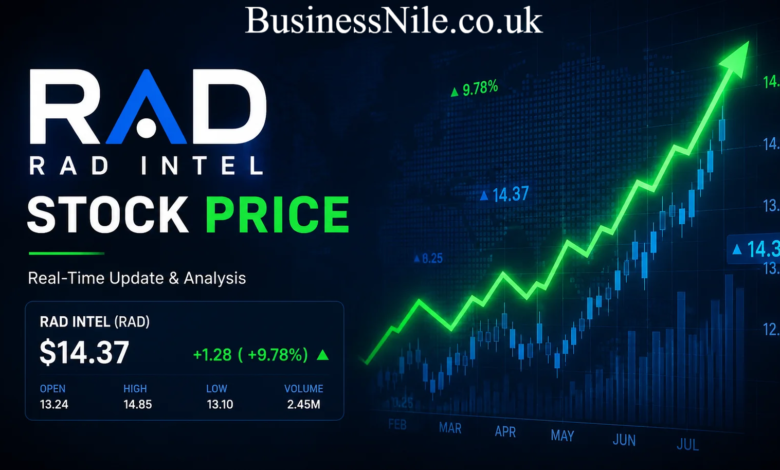
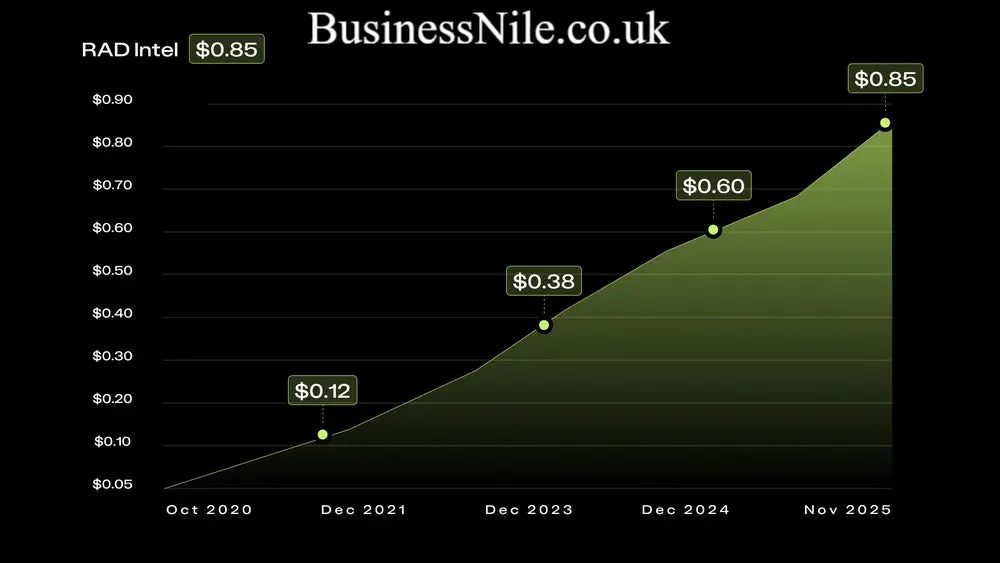
More recently, the company opened a larger Regulation A+ offering aiming to raise tens of millions more dollars, with reports pointing to share prices around 0.85 dollars per share at certain points. Valuation figures have shifted dramatically too, with some reports claiming growth from around 4 million dollars to well over 40 million dollars in company valuation over a period of years.
Keep in mind, these figures come from the company itself and its offering platforms. Always verify current numbers directly through official SEC filings, specifically Form 1-A, before making any decisions.
Source nasdaqprivatemarket.com
What Is RAD Intel? AI Marketing Platform and Business Model
Now let us talk about what RAD Intel actually does, since understanding the business is just as important as understanding rad intel stock as an investment.
RAD Intel builds an AI platform that helps brands figure out what marketing content will actually work before they spend money on it. The technology analyzes audience behavior, influencer performance, and content trends across platforms like TikTok, Instagram, and Meta. Instead of guessing which influencer or content style will resonate, brands get data backed predictions.
Products and Customers
The company offers tools that identify which topics and creators are likely to drive engagement with a specific target audience. It then matches brands with influencers who already have a track record posting about those exact topics.
RAD Intel counts recognizable names among its client base, including companies like Hasbro, Omnicom, and Skechers. Its customer base spans industries such as entertainment, gaming, healthcare, ecommerce, education, banking, travel, and fashion. This wide range shows the platform is not limited to one narrow niche.
Growth Strategy and Holding Company Structure
RAD Intel operates under RAD Technologies Inc, its parent holding company structure. This setup allows the business to manage its various product lines, funding vehicles, and future expansion plans under one corporate umbrella.
The company’s growth strategy centers on a software as a service model, focused on landing enterprise clients and then expanding those relationships over multi year contracts. Rather than chasing one time deals, RAD Intel wants long term, recurring revenue from major brands and agencies. The company has stated it aims to become the standard AI platform for digital content creation and influencer marketing.
The Risks of Investing in Private Companies Like RAD Intel
Before you consider putting money into rad intel stock, you need to understand the real risks involved. Private company investing is not the same as buying a diversified index fund.
Consider these key risks:
- Limited liquidity. You may not be able to sell your shares for years, if at all, until a major exit event happens.
- Valuation uncertainty. Private companies set their own share prices, which means valuations are not tested by open market trading every day.
- Less financial transparency. You will not get the same level of detailed quarterly reporting that public companies must provide.
- Higher failure risk. Early stage and growth stage companies fail at much higher rates than established public corporations.
- Dilution risk. Future funding rounds can dilute your ownership percentage if you do not participate in every raise.
None of this means private investing is a bad idea for everyone. It simply means you should treat it as a higher risk, higher potential reward category, and only invest money you can afford to lose.
RAD Intel Stock vs Buying Publicly Traded AI Stocks
If you are drawn to the AI marketing space but want more liquidity and transparency, publicly traded AI stocks offer a very different experience compared to rad intel stock.
Public AI companies let you buy and sell shares instantly through any standard brokerage account. You get quarterly earnings reports, analyst coverage, and real time pricing based on actual market demand. There is no waiting years for an exit event to access your money.
On the other hand, buying rad intel stock today means getting in early, potentially at a lower valuation than a future public listing might offer. This is the classic tradeoff between private and public investing. Private investing offers the chance for outsized early stage growth, while public investing offers safety, transparency, and liquidity.
I always tell people to think about their own risk tolerance here. If losing your entire investment would seriously hurt you financially, public stocks are probably the safer path. If you can handle a total loss and want exposure to early stage AI growth, a small allocation toward something like RAD Intel might make sense.
RAD Intel’s Long Term Goal: Going Public
Based on the company’s own actions, going public appears to be part of RAD Intel’s long term roadmap. The reservation of the RADI ticker and the launch of a Regulation A+ offering both point toward building the infrastructure needed for a future national exchange listing.
Regulation A+ offerings are often described as a bridge between early startup fundraising and a full blown IPO. Companies use this stage to build a broader shareholder base and stronger financial reporting habits before facing the intense scrutiny of public markets.
If RAD Intel does eventually list on a public exchange, current private investors could see their shares convert into publicly tradable stock, assuming the company completes that transition successfully. However, this is not guaranteed. Many companies plan to go public and never do, or take far longer than expected.
Conclusion
So where does that leave you? Rad intel stock represents a private, high risk, high potential opportunity in the growing AI marketing space. The company is not publicly traded yet, though it has reserved a ticker and opened larger funding rounds that suggest a public listing could happen someday. You can currently invest through crowdfunding platforms, direct offerings, or secondary marketplaces, but you should always weigh the risks of illiquidity and valuation uncertainty before committing money.
If you are seriously considering this investment, take time to read the official offering documents and SEC filings rather than relying only on marketing materials. What do you think, is early stage AI investing worth the risk for you? Share your thoughts or pass this article along to someone else researching rad intel stock today.
Frequently Asked Questions
Is RAD Intel stock available on the stock market right now? No. RAD Intel remains a private company, so its shares are not currently traded on any public stock exchange.
What is the RAD Intel stock ticker symbol? The company has reportedly reserved the ticker RADI for a future public listing, but it is not an active trading symbol yet.
How can I buy RAD Intel shares? You can currently invest through equity crowdfunding platforms, the company’s direct investor portal, or secondary marketplaces that offer pre IPO shares from existing shareholders.
Is RAD Intel the same company as Rad AI? No. RAD Intel focuses on AI powered marketing and influencer analytics, while Rad AI is a separate company focused on radiology technology. Many people confuse the two names.
Is investing in RAD Intel safe? Like all private company investments, it carries higher risk than public stocks, including limited liquidity and less financial transparency. Only invest money you are comfortable potentially losing.
Will RAD Intel eventually go public? The company has taken steps like reserving a ticker and running a Regulation A+ offering that suggest a future public listing is part of its plan, though nothing is guaranteed.
What is RAD Intel’s current valuation? Reported figures suggest the valuation has grown significantly over the past several years, though exact numbers should always be confirmed through official SEC filings rather than marketing claims.
Can non accredited investors buy RAD Intel shares? Yes, through its Regulation A+ offering and certain crowdfunding campaigns, both accredited and non accredited investors have been able to participate, subject to investment limits.
Businessnile.co.uk
Email: johanharwen314@gmail.com
Author Name: Hamid Ali
About the Author: Hamid Ali is a financial content writer who covers startup investing, AI companies, and personal finance topics. She focuses on breaking down complex investment concepts into clear, practical guidance for everyday readers. When she is not writing, she enjoys researching emerging tech trends and sharing investing tips with her community.