Introduction
You probably grew up seeing Eddie Bauer jackets at the mall, in catalogs, or maybe hanging in your own closet right now. So it likely hit you hard when news broke about the Eddie Bauer store closures sweeping across North America. This was not a small trim of underperforming locations. This was the end of an entire chapter in American retail.
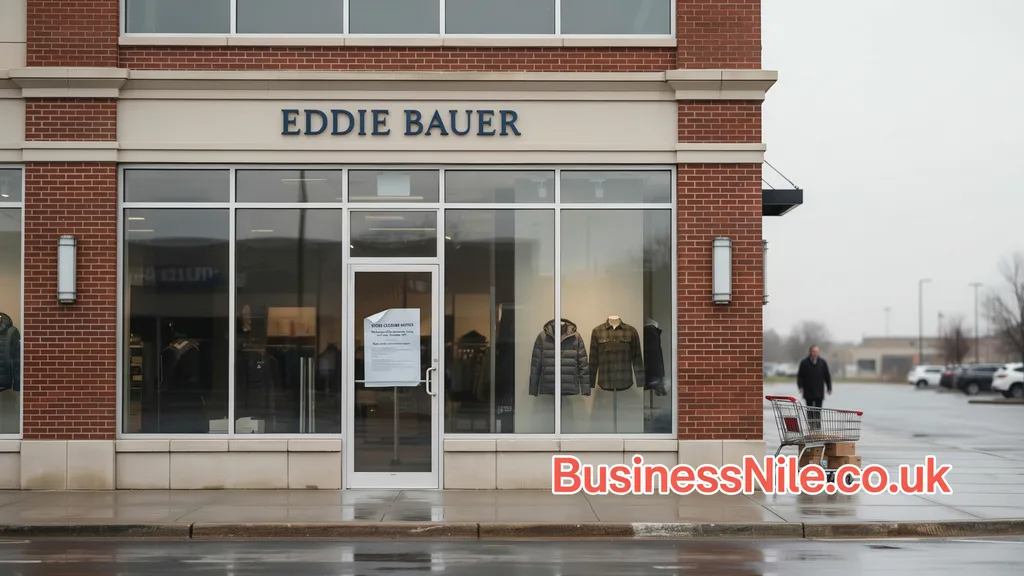
In early 2026, the company behind Eddie Bauer’s physical stores filed for Chapter 11 bankruptcy. What followed was a chain reaction that led to every single brick and mortar location shutting its doors. After 106 years in business, the Eddie Bauer store closures became one of the most talked about retail stories of the year.
This article walks you through everything connected to this event. You will learn about the company itself, what it sold, where it stood in the market, how it made money, who it competed against, and what the future holds for the Eddie Bauer name. By the end, you will understand not just what happened, but why it matters for retail as a whole.
Company Introduction
Eddie Bauer started in 1920 in Seattle, Washington. A man named Eddie Bauer opened a small store that focused on outdoor gear built for real conditions, not just style. He later invented the quilted down jacket, a product that changed outdoor apparel forever and became a staple for hikers, hunters, and everyday winter commuters alike.
Over the decades, the brand grew into a household name. By the early 2000s, Eddie Bauer had stores in all 50 states. The brand built a reputation around durability, outdoor authenticity, and a slightly more premium price point than fast fashion competitors.
However, the business behind the brand changed hands several times. Today, the Eddie Bauer brand and intellectual property belong to Authentic Brands Group and SPARC Group LLC. The day to day store operations were run by a separate company called Catalyst Brands, which also managed Eddie Bauer LLC. This separation between brand ownership and store operations turned out to be a critical detail in how the Eddie Bauer store closures unfolded.
Eddie Bauer LLC filed for Chapter 11 bankruptcy protection on February 9, 2026, in the U.S. Bankruptcy Court for the District of New Jersey. This was not the brand’s first brush with financial trouble. It marked the third bankruptcy for the company, following earlier filings in 2003 and 2009.
Services and Products
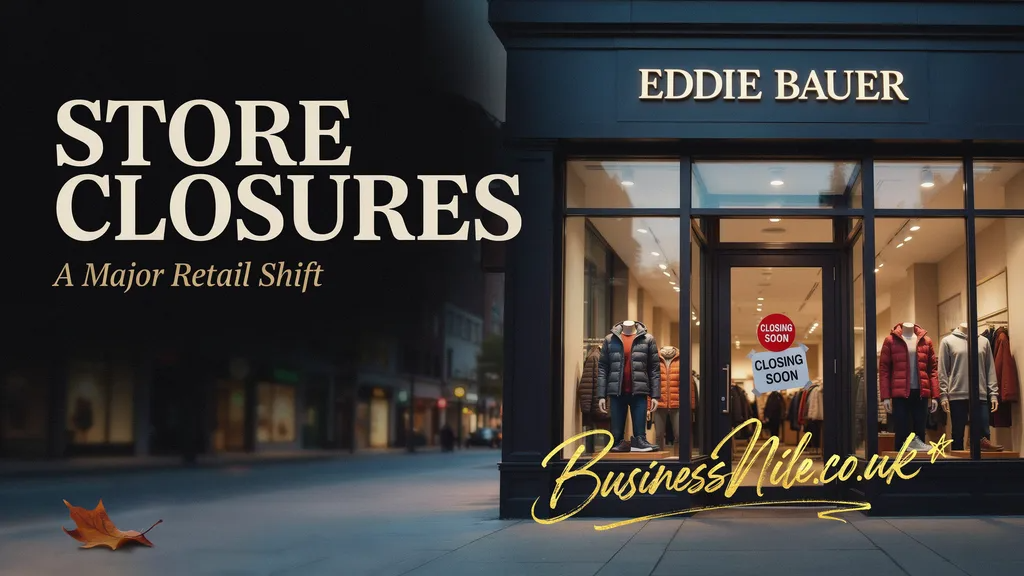
Eddie Bauer built its identity around outdoor focused apparel and gear. Before the closures, you could walk into a store and find a wide range of products designed for both rugged outdoor use and everyday casual wear.
Core Product Categories
The company’s main offerings included:
- Down jackets and insulated outerwear
- Fleece layers and base layers
- Hiking and travel pants
- Outdoor accessories like gloves, hats, and backpacks
- Casual everyday clothing for men, women, and kids
- Footwear designed for outdoor activity
What Made the Brand Stand Out
Eddie Bauer positioned itself as a brand for people who actually spend time outdoors, not just those who want the look. I always thought their down jackets had a reputation that punched above their price point, especially compared to premium competitors charging significantly more for similar warmth.
The brand also leaned into its heritage. Marketing often referenced its 1920s roots and the original invention of the quilted goose down jacket. This story gave the company a sense of authenticity that newer brands struggled to match.
Retail and Online Channels
Before the bankruptcy, Eddie Bauer sold through three main channels:
- Physical retail stores in malls and shopping centers
- An online store at eddiebauer.com
- Wholesale partnerships with other retailers
The Eddie Bauer store closures only affected the physical retail side. The company’s e-commerce, wholesale, and design operations are continuing under a new operator called Outdoor 5. This distinction matters a lot, because it means the brand itself is not gone. Only the in person shopping experience has disappeared, at least for now.
Market Position
Eddie Bauer occupied a specific niche in the outdoor apparel space. It sat between budget brands like Old Navy and premium technical brands like Patagonia or The North Face. This middle position once worked well, but it became a difficult spot to defend as the retail landscape shifted.
A Shrinking Footprint
Eddie Bauer began 2026 with roughly 220 stores, but that number dropped quickly as leases expired. By the time closures accelerated, 174 stores remained across the U.S. and Canada. At its broader peak, the brand had a retail presence in 45 states, a notable decline from reaching all 50 states by the early 2000s.
Mall Dependency Hurt the Brand
A large share of Eddie Bauer locations sat inside traditional shopping malls. As foot traffic in malls declined nationwide over the past decade, brands like Eddie Bauer felt the pressure directly. Online outdoor gear sales grew by roughly 35 percent annually between 2020 and 2025, while traditional mall based outdoor retailers saw foot traffic decline by an average of 28 percent during the same period.
Regional Presence
The closures touched communities across the country. For example, Minnesota alone had nine remaining Eddie Bauer locations, including stores at Mall of America and in Albertville, Duluth, Eagan, Eden Prairie, Edina, Medford, Minnetonka, and Woodbury. Stories like this played out in states across the nation, showing just how widespread the brand’s physical presence once was.
Why Market Position Mattered Here
Eddie Bauer’s middle of the road positioning meant it lacked the cult loyalty of premium outdoor brands and the price advantage of budget competitors. When economic pressure hit, the brand had fewer reasons for customers to choose it specifically over alternatives. This positioning gap is a major reason the Eddie Bauer store closures happened so completely rather than through a partial restructuring.
Revenue Model
To understand the Eddie Bauer store closures, you need to understand how the company actually made money and where that model broke down.
Traditional Retail Revenue
Eddie Bauer’s revenue model relied heavily on physical store sales. Customers walked into mall locations, browsed seasonal collections, and made purchases supported by in store staff and visual merchandising. This model works well when foot traffic is strong, but it becomes expensive and risky when traffic declines.
Lease Obligations Created Pressure
Physical retail stores come with fixed costs, especially rent. The 174 stores in the final closure wave represented more than 1.08 million square feet of retail space. Paying rent on that much square footage requires consistent, predictable sales volume. When sales softened, those lease obligations became a serious financial burden.
Online and Wholesale Channels
Online sales and wholesale partnerships represented another part of the revenue picture. These channels typically carry lower overhead than physical stores since they do not require rent, in store staff, or mall common area fees. This is part of why the e-commerce business could continue operating under Outdoor 5 even as the physical stores closed.
Mounting Debt
Court documents showed the company carried more than 1 billion dollars in debt at the time of the bankruptcy filing. That level of debt, combined with declining store revenue, created a situation where the company could not generate enough cash flow to service its obligations and keep stores open.
What Caused the Financial Strain
According to court filings, several factors combined to strain the revenue model:
- Declining in store sales
- Supply chain disruptions
- Inflation increasing operating costs
- Tariff uncertainty affecting sourcing and pricing
- Heavy lease obligations on underperforming locations
The company specifically cited declining sales, supply chain disruptions, inflation, and tariff uncertainty among the headwinds behind its financial troubles.
Competitors
Eddie Bauer never operated in a vacuum. It competed against a wide range of brands, and understanding this competitive landscape helps explain why the Eddie Bauer store closures happened the way they did.
Premium Outdoor Brands
Brands like Patagonia, The North Face, and Arc’teryx compete on technical performance and strong brand loyalty. These companies often charge more, but customers willingly pay for perceived quality and brand identity. Eddie Bauer struggled to match this level of devoted following.
Mid Range Competitors
Columbia Sportswear and L.L.Bean sit closer to Eddie Bauer’s original positioning. Both brands have managed to maintain stronger online and catalog based sales models, which gave them more flexibility as mall traffic declined.
Budget and Fast Fashion Options
Retailers like Old Navy, Uniqlo, and various big box stores offer outdoor inspired clothing at significantly lower prices. For budget conscious shoppers, these alternatives often won out over Eddie Bauer’s mid tier pricing.
Online Only Disruptors
Direct to consumer brands built entirely online, without the cost of physical stores, have also reshaped this market. These companies operate with lower overhead and can often price more competitively while still maintaining healthy margins.
A Broader Retail Trend
Eddie Bauer was far from alone in facing this kind of pressure. More than 1,400 U.S. retail stores and restaurants were set to close by the end of 2026, with major chains including Wendy’s and Macy’s also announcing significant closures. Carter’s, one of North America’s largest children’s and baby apparel retailers, announced plans to close 150 stores over three years, including about 100 by the end of 2026. Macy’s separately announced plans in January 2025 to close 150 locations through 2026. The Eddie Bauer store closures fit into this much larger pattern of brick and mortar retail contraction.
Future Plans
Many people assume the Eddie Bauer store closures mean the brand is finished entirely. That is not accurate. The story is more nuanced, and there is a real path forward for the name even without physical stores.
The Brand Will Continue Online
The bankruptcy affected only the retail store operator, not the brand owner Authentic Brands Group. Eddie Bauer’s e-commerce, wholesale, and design operations continue under a new operator called Outdoor 5. This means you can still shop the Eddie Bauer brand online, even though the in person mall experience is gone.
Licensing Possibilities
Despite the store closures, the brand itself continues, and Authentic Brands Group can still license the brand to other retailers or operators. Authentic Brands Group has a track record of doing this successfully with other heritage names in its portfolio, including Reebok, Nautica, Brooks Brothers, and Dockers.
This licensing model could mean Eddie Bauer products eventually appear again in physical stores, but under a different operator with a leaner cost structure. It is a common strategy in modern retail, allowing a brand to survive its operator’s bankruptcy.
Liquidation Timeline
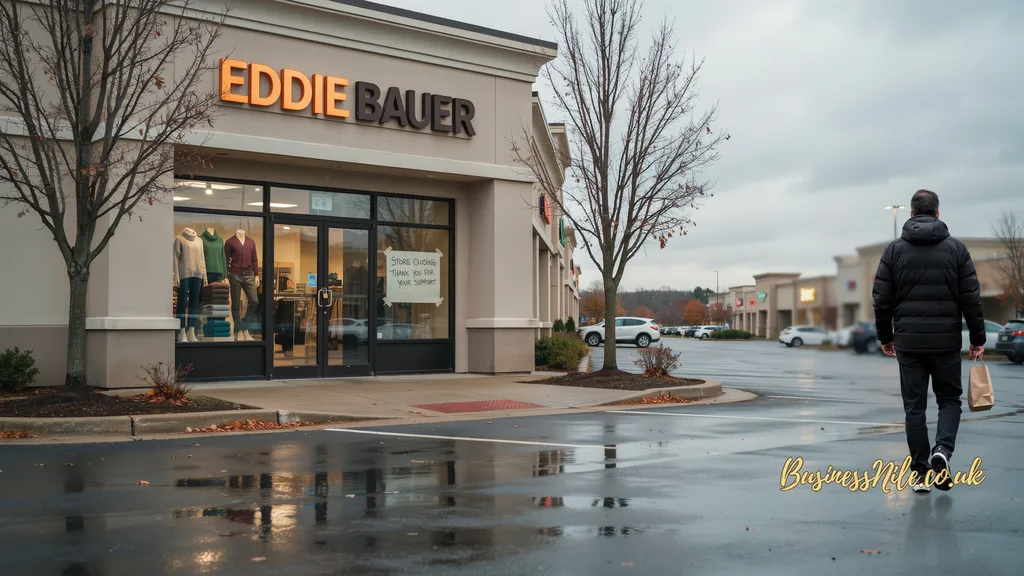
The closures did not happen overnight. Liquidation sales were underway at the 175 Eddie Bauer stores across the U.S. and Canada, with those store closing sales projected to wrap up before April 30. Gift cards stopped being accepted after a set date, and no refunds or returns were accepted once the closing sales began.
What This Means Going Forward
If you loved shopping at Eddie Bauer in person, that specific experience is gone for now. But the brand’s products, design team, and online presence are still active. Whether a future operator brings back physical stores remains to be seen, but the door has not been permanently closed on Eddie Bauer as a name in the marketplace.
Benefits and Lessons from the Closures
It might feel strange to talk about benefits in the context of store closures, but there are real takeaways here for shoppers, retailers, and anyone watching the retail industry closely.
For Shoppers
You can still access Eddie Bauer products online, often at discounted prices during the transition period. This is a good moment to grab classic items like their signature down jackets if you have been holding off on a purchase.
For Retail Industry Watchers
The Eddie Bauer store closures offer a clear case study in how brand ownership and store operations can be separated. This structure actually protected the underlying brand from complete disappearance, even though the physical retail arm failed. That is a useful lesson in how modern retail bankruptcies can play out differently than they did decades ago.
For Aspiring Retailers
If you are building or running a retail business, this story highlights a few clear lessons:
- Lease obligations can become dangerous during periods of declining foot traffic
- A strong online channel can survive even when physical stores cannot
- Brand identity and store operations benefit from being treated as separate assets
- Mid tier market positioning carries real risk when budget and premium options both pull customers away
A Personal Take
I think the most important lesson from the Eddie Bauer store closures is that a beloved brand name does not automatically guarantee survival of every part of the business. Customers’ fondness for a brand and a company’s financial structure are two very different things. Eddie Bauer proves that even a 106 year old name with genuine heritage can lose its physical stores while still finding a way to keep the brand alive elsewhere.
Conclusion
The Eddie Bauer store closures mark a significant moment in retail history. After 106 years and three separate bankruptcy filings, the company’s physical stores have closed for good across the United States and Canada. The causes were a mix of declining mall traffic, heavy lease costs, rising debt, and broader shifts toward online shopping.
Yet this is not a complete ending. The Eddie Bauer brand survives through its online store, wholesale partnerships, and the possibility of future licensing deals. The Eddie Bauer store closures show how today’s retail bankruptcies often separate a brand’s identity from its physical footprint, allowing the name to live on even when the stores do not.
Did you ever shop at an Eddie Bauer location near you? Share your memories or thoughts on the closures, and pass this article along to anyone who grew up wearing that classic Eddie Bauer down jacket.
FAQs
1. Why did Eddie Bauer close all its stores? Eddie Bauer LLC, the store operator, filed for Chapter 11 bankruptcy in February 2026 due to declining sales, heavy lease obligations, inflation, supply chain issues, and more than 1 billion dollars in debt. No buyer was found during the bankruptcy process, leading to full liquidation of physical stores.
2. Is Eddie Bauer completely out of business? No. The bankruptcy only affected the physical store operator. The Eddie Bauer brand, along with its e-commerce, wholesale, and design operations, continues under a new operator called Outdoor 5.
3. How many Eddie Bauer stores closed? The company began 2026 with about 220 stores, which dropped to 174 to 175 locations by the time the final closure and liquidation process took place across the United States and Canada.
4. Can I still shop Eddie Bauer online? Yes. You can still purchase Eddie Bauer products through the brand’s online store, since the closures only affected brick and mortar retail locations, not the e-commerce business.
5. Will Eddie Bauer open physical stores again in the future? It is possible. Authentic Brands Group, which owns the Eddie Bauer intellectual property, can license the brand to other retailers or operators, which could lead to new physical locations down the road.
6. Did Eddie Bauer file for bankruptcy before? Yes. This was the third bankruptcy filing for the company, with earlier filings occurring in 2003 and 2009.
7. What happens to Eddie Bauer gift cards after the closures? Gift cards stopped being accepted in stores after a set cutoff date in March 2026, and the closing sales did not allow refunds or returns.
8. Are other retailers closing stores in 2026 too? Yes. Eddie Bauer is part of a much larger retail trend, with more than 1,400 stores and restaurants across various chains expected to close by the end of 2026, including major names like Macy’s and Carter’s.
Also Read In BusinessNile.co.uk
Email: johanharwen314@gmail.com
Author Name: Hamid Ali
About the Author: Hamid Ali is a business and retail industry writer who focuses on translating complex corporate news into clear, useful stories for everyday readers. He has covered major shifts in retail, consumer trends, and brand strategy, helping readers understand not just what happened, but why it matters. Hamid believes that staying informed about the businesses around us helps everyone make smarter choices, whether as a shopper, an employee, or a future entrepreneur.