
Starting a business means picking a legal structure, and for millions of small business owners in the United States, that structure is the LLC. If you’ve searched “what is an LLC,” you’re probably trying to decide whether it’s the right fit for your business — not just looking for a dictionary definition. This guide covers exactly that: what an LLC actually is, how it works day to day, what it costs, how it’s taxed, and how it compares to other business structures.
What Does LLC Mean?
An LLC, or limited liability company, is a legal business structure that separates your personal assets from your business’s debts and liabilities. In plain terms: if your LLC gets sued or can’t pay its bills, creditors generally can’t come after your house, car, or personal savings.
The LLC business structure was designed to blend two things business owners want most:
- The liability protection of a corporation — owners aren’t personally responsible for business debts.
- The simplicity and tax flexibility of a partnership or sole proprietorship — no corporate-level taxes or heavy formalities.
An LLC isn’t a corporation, though the two are often confused. It’s its own distinct entity type, and every U.S. state has its own LLC statute governing how one is formed and operated.
How Does an LLC Work?
An LLC works by creating a legal wall between the business and the people who own it. Once formed, the LLC itself — not the individual owners — enters contracts, opens bank accounts, owns property, and is legally responsible for its own debts.
Here’s what that looks like in practice:
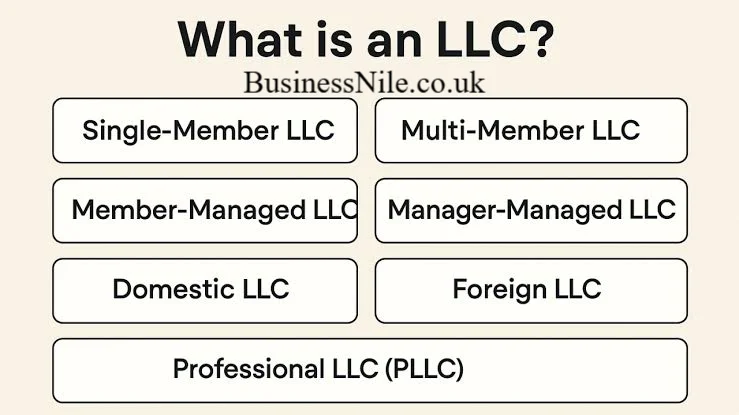
- LLC owners are called members. A single member LLC has one owner; a multi member LLC has two or more.
- Ownership doesn’t require stock. Unlike a corporation, LLC ownership is typically expressed as a percentage interest, agreed upon by the members.
- Management is flexible. Members can run the LLC themselves (“member-managed”) or appoint managers to handle daily operations (“manager-managed”).
- Profits and losses pass through to owners. The LLC itself usually doesn’t pay federal income tax; instead, LLC profits and losses flow to members’ personal tax returns.
- The business needs its own identity. Most states require an LLC to have a registered agent, a unique business name, and formal filing with the state to legally exist.
This structure is why LLCs have become the default choice for freelancers, consultants, real estate investors, and small business owners who want liability protection without the paperwork burden of a full corporation.
How to Start an LLC
Forming an LLC follows a fairly consistent process across states, though specific rules and fees vary.
1. Choose Your LLC Business Name
Your name must be unique in your state, typically searchable through the Secretary of State’s business database, and must include a designator like “LLC” or “Limited Liability Company.” Most states also restrict certain words (like “Bank” or “Insurance”) unless you meet extra requirements.
2. Select a Registered Agent
An LLC registered agent is a person or company designated to receive legal documents, tax notices, and state correspondence on the LLC’s behalf. Every state requires one, and the agent must have a physical address in the state of formation and be available during business hours.
3. File the Formation Documents
This is the official step that creates your LLC. Depending on the state, this document is called:
- Articles of Organization (most common)
- Certificate of Formation (used in states like Delaware and Texas)
- Certificate of Organization (used in a few states)
You’ll file this with your state’s business filing agency, usually the Secretary of State, along with the required LLC filing fee. Filing fees vary significantly by state — some are under $100, others run several hundred dollars — so it’s worth checking your specific state’s current fee before filing.
4. Create an Operating Agreement
An LLC operating agreement is an internal document outlining ownership percentages, member responsibilities, voting rights, and how profits and losses are distributed. Most states don’t legally require one, but skipping it is one of the most common mistakes new LLC owners make — without it, disputes between members have no agreed-upon rulebook to fall back on.
5. Handle Ongoing Requirements
Formation isn’t a one-time task. Most states require an LLC annual report and an LLC annual fee to keep the business in good standing. Missing these can result in penalties or administrative dissolution of the LLC.
LLC Benefits and Drawbacks
Benefits of an LLC
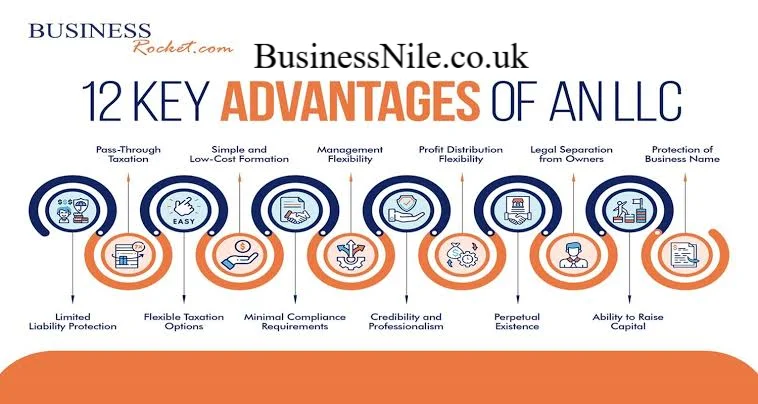
- Personal liability protection — members’ personal assets are generally shielded from business debts and lawsuits.
- Pass-through taxation — avoids the “double taxation” that traditional C corporations face.
- Flexible management structure — no requirement for a board of directors or corporate officers.
- Credibility — an LLC often looks more established to clients, lenders, and partners than an unregistered sole proprietorship.
- Fewer formalities — no mandatory shareholder meetings or extensive corporate record-keeping.
Disadvantages of an LLC
- Self-employment taxes — LLC members typically pay self-employment tax on business profits, which can be higher than what corporate shareholders pay on dividends.
- State fees add up — between formation costs, annual reports, and registered agent fees, ongoing costs can accumulate.
- Limited life in some states — a few states still require an LLC to specify a dissolution date or dissolve upon a member’s exit, though most modern statutes allow perpetual existence.
- Not ideal for raising venture capital — investors and VCs typically prefer C corporations for stock issuance and equity structuring.
LLC Tax Advantages and Rules
By default, the IRS treats LLCs as pass-through entities — the business itself doesn’t pay federal income tax. Instead:
| LLC Type | Default IRS Tax Classification |
|---|---|
| Single member LLC | Taxed like a sole proprietorship (Schedule C) |
| Multi member LLC | Taxed like a partnership (Form 1065) |
| LLC electing corporate tax | Can elect C corporation or S corporation status |
This is often called LLC pass through taxation — profits and losses pass directly to the members’ personal tax returns, avoiding the double taxation that C corporations face at both the corporate and shareholder level.
One important nuance: LLC members who actively work in the business generally owe self-employment tax (covering Social Security and Medicare) on their share of profits. Some LLC owners elect S corporation tax treatment specifically to reduce this self-employment tax burden, since S corp owners can split income between salary and distributions. This election doesn’t change the LLC’s legal structure — it only changes how the IRS taxes it.
LLC vs Sole Proprietorship
A sole proprietorship is the default structure for a one-person business with no formal registration — and it offers zero liability protection. An LLC requires state filing and fees, but in exchange, it separates personal and business liability. If you’re operating under your own name with real financial risk (contracts, clients, inventory, employees), the liability protection alone usually justifies forming an LLC.
LLC vs Partnership vs Corporation
| Feature | LLC | Partnership | Corporation |
|---|---|---|---|
| Personal liability protection | Yes | No (general partnership) | Yes |
| Taxation | Pass-through (default) | Pass-through | Double taxation (C corp) unless S corp election |
| Formalities required | Low | Low | High (board, bylaws, meetings) |
| Ownership structure | Membership interests | Partner shares | Stock/shares |
| Best suited for | Small to mid-size businesses | Two or more owners sharing simple operations | Businesses raising outside investment |
The LLC vs S corporation comparison deserves special mention: an S corp isn’t a separate legal entity type — it’s a tax election. An LLC can elect to be taxed as an S corp while remaining legally structured as an LLC.
Is an LLC Right for Your Business?
An LLC makes sense if you want liability protection without heavy corporate formality, and your business generates enough revenue or risk exposure to justify formation and ongoing fees. It’s typically the right call for:
- Consultants and freelancers with client contracts
- Real estate investors holding rental property
- Small retail or service businesses with employees
- Anyone entering agreements or carrying insurance risk under a business name
It may be less ideal if you’re planning to raise venture capital at scale, in which case a C corporation is usually the standard choice for investors.
FAQ Section
What is an LLC and how does it work?
An LLC is a legal business structure that separates the owners’ personal assets from the business’s debts and legal liabilities. It works by creating a distinct legal entity that can own property, sign contracts, and be sued independently of its owners, while profits and losses typically pass through to the owners’ personal tax returns.
What is an LLC in business?
In a business context, an LLC is the entity type that owns and operates the business itself. The company — not the individual owner — holds the bank accounts, contracts, and liabilities, giving the owner(s) legal and financial separation from the business.
LLC meaning for dummies?
Simply put, an LLC is a way to run a business where your personal money and property are protected if the business runs into debt or a lawsuit. You register it with your state, and it operates somewhat like a mix between a sole proprietorship and a corporation.
What is an LLC example?
A freelance graphic designer who forms “Studio Name LLC” to sign client contracts and hold business earnings separately from personal finances is a common example. Real estate investors who create an LLC to hold a rental property are another typical case.
What is an LLC property?
LLC property refers to real estate or other assets owned by the LLC itself rather than by an individual. Many real estate investors title rental properties under an LLC specifically to shield their personal assets from tenant lawsuits or property-related debts.
LLC vs Ltd — what’s the difference?
“LLC” is a U.S. business structure, while “Ltd” (Limited Company) is the equivalent designation used in the UK and several other countries. Both limit owner liability, but they follow different legal frameworks, filing systems, and tax rules specific to their respective countries.
What is an LLC used for?
An LLC is used to legally operate a business while protecting the owner’s personal assets from business debts and liabilities. It’s commonly used by small business owners, freelancers, real estate investors, and startups that want liability protection without full corporate formality.
How does LLC registration work?
LLC registration involves choosing a compliant business name, appointing a registered agent, and filing formation documents (Articles of Organization or a similar form) with the state, along with the required filing fee. Once approved, most states also require ongoing annual reports to keep the LLC active.
Author Bio: Hamid Ali is a business and finance content writer specializing in small business formation, tax strategy, and legal business structures. With a focus on simplifying complex topics like LLC formation, taxation, and liability protection, He helps entrepreneurs make informed decisions when starting and growing their businesses.
Also Read: