
Introduction
You need a car. Your credit score is not great. Traditional banks keep turning you down. This situation feels frustrating, and millions of people face it every year. That is exactly where buy here pay here dealerships step in. They promise fast approvals, no bank needed, and a car in your driveway by the end of the day. Sounds like a lifesaver, right?
But before you walk into one of these lots, you need the full picture. Buy here pay here financing can genuinely help you get back on the road. It can also trap you in a financial cycle that is tough to escape. This article covers how it works, who benefits, what it really costs, and what you should do instead if possible.
By the end, you will know exactly what to watch out for and how to make the smartest decision for your situation.
How buy here pay here actually works
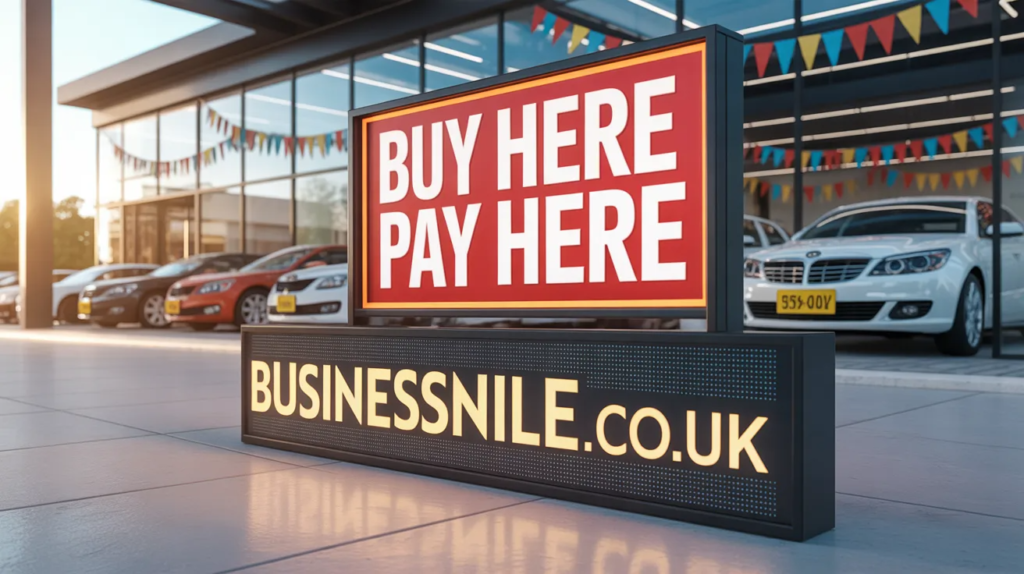
A typical car dealership sells you a car and then sends your loan to a bank or credit union. That lender handles your payments and interest going forward. A buy here pay here dealership does both jobs itself. It sells you the car AND finances the loan in-house. No third-party lender is involved at all.
Here is what the process usually looks like step by step:
- You visit the lot and choose a vehicle from their inventory.
- The dealer reviews your income and employment, not your credit score.
- You agree on a price, down payment, and weekly or bi-weekly payment schedule.
- You drive the car home and make payments directly to the dealership.
The dealer takes on the risk because they believe you will pay. That risk comes at a price, which we will get into shortly.

What kinds of vehicles do they sell?
Most buy here pay here lots carry used vehicles, often older models with higher mileage. Do not expect the latest releases or luxury brands. These dealers keep their inventory affordable so they can finance it themselves without taking on too much exposure per vehicle.
You might find vehicles ranging from $5,000 to $15,000 on average. Some larger operations do carry newer inventory, but that is less common.
The real benefits of buy here pay here
It is easy to criticize this model, but it does solve real problems for real people. Here is what genuinely works in its favor.
Approval when no one else says yes
If you have a bankruptcy, repossession, or a score below 580, most traditional lenders will reject your application immediately. Buy here pay here dealers focus on your current ability to pay, not your past mistakes. This makes them one of the only realistic options for a large segment of car buyers.
According to Experian, roughly 16% of Americans have a credit score below 580, which is considered deep subprime territory. That is tens of millions of people who struggle to get traditional auto loans.
Fast and simple process
There are no lengthy bank applications or weeks of waiting. The dealer approves you on the spot. You bring proof of income, a valid ID, proof of residence, and a down payment. That is usually all it takes. For someone who needs transportation urgently for work, this speed is genuinely valuable.
Weekly payments can feel manageable
Many buy here pay here dealers structure payments weekly or bi-weekly to align with pay cycles. Some buyers find it easier to budget a smaller weekly amount rather than one large monthly bill. This is not the most financially efficient approach, but it helps people stay consistent.
A chance to rebuild
Some dealers report your payment history to credit bureaus. If yours does, every on-time payment adds positive data to your credit report. Over 12 to 24 months of consistent payments, you could improve your score enough to qualify for traditional financing next time.
The real risks you cannot ignore
Now for the part most salespeople will not walk you through when you are standing on the lot.
Interest rates that are far above average
This is the biggest financial concern. The national average interest rate for a subprime auto loan from a bank sits around 12% to 15%. Buy here pay here dealers regularly charge 20%, 25%, or even higher. Some states cap these rates; many do not.
On a $10,000 loan at 25% interest over 36 months, you could pay back more than $15,000 total. You are paying a massive premium for the convenience and access.
Older vehicles with expensive problems
The inventory at many buy here pay here lots is older and has higher mileage. This is not a universal truth, but it is a pattern worth knowing. When you buy an older car, mechanical issues become more likely. If the vehicle breaks down, you still owe the full loan balance. You now have a broken car and a payment you cannot skip.
GPS tracking and starter interrupt devices
Many buy here pay here dealers install GPS trackers and starter interrupt devices on their vehicles. This allows them to locate and disable the car if you miss a payment. Some states regulate this practice, but it is still common across the country. You need to know about this before you agree to anything.
Missing payments triggers fast repossession
Because the dealer owns the loan, they can move quickly if you fall behind. Traditional lenders typically give you several months before repossession. Some buy here pay here dealers will repossess a vehicle after one or two missed payments, sometimes within days. This tight margin makes the arrangement stressful if your income is irregular.
Vehicles may be overpriced
It is common for dealers to price vehicles above market value on their lots. When financing is easy and credit options are limited, some buyers do not shop around as much. Always check the vehicle’s market value on sources like Kelley Blue Book or Edmunds before agreeing to a price.
How buy here pay here affects your credit
This is where things get inconsistent across the industry. Some buy here pay here dealers do report to all three major credit bureaus: Equifax, Experian, and TransUnion. Others report to none. A few report to only one.
Before you sign, ask the dealer directly: do you report to credit bureaus? Get the answer in writing. If they do not report, your on-time payments will not help your credit score at all. You will pay high interest for years and have nothing to show for it on your credit report when you finish.
What happens if you miss a payment?
If the dealer does report to bureaus and you miss a payment, your credit score will take a hit. A repossession through a buy here pay here dealer can stay on your credit report for up to seven years, just like any other repossession. Do not assume this type of financing is gentler on your credit if things go wrong.
Who qualifies for buy here pay here financing?
The approval criteria vary by dealer, but most look for the following:
- Steady, verifiable income (employment stubs or bank statements)
- A valid government-issued ID
- Proof of current address (utility bill or lease agreement)
- A down payment, usually between $500 and $2,000
- Proof of insurance or ability to get it
Credit history is often secondary or not considered at all. The dealer cares mostly about whether you can make the next payment. That is the core logic of the entire model.
Smarter alternatives to explore first
Before you commit to buy here pay here financing, consider whether any of these options might work for you. Even a small improvement in your situation can unlock better terms.
Credit unions
Credit unions often work with members who have bruised credit. Their rates are almost always lower than buy here pay here dealers. If you are a member of a local credit union or are eligible to join one, ask about their subprime auto loan programs before you visit any dealership.
Secured credit building
If you do not urgently need a car, spending three to six months building your credit first can save you thousands in interest. Open a secured credit card, pay it in full each month, and watch your score climb. A 50-point improvement can shift you from buy here pay here territory into a more affordable loan.
A co-signer
If a family member or close friend with strong credit is willing to co-sign your loan, you may qualify for traditional financing at a significantly lower rate. This arrangement carries risk for both parties, so be honest about your ability to pay before asking anyone to co-sign.
Public or employer transportation
This is not always practical, but if public transit or ride-sharing works for your situation temporarily, it may be worth using while you build savings and credit. Rushing into a high-interest loan when you could wait a few months sometimes makes the financial picture worse, not better.
I have seen people save $3,000 to $5,000 in total interest just by waiting four months and improving their credit score before financing a car. Patience is genuinely worth money here.
What to do before signing at a buy here pay here dealer
If you have weighed the alternatives and buy here pay here is still your best option, these steps will protect you from the worst outcomes.
Get a pre-purchase inspection
Always take the vehicle to an independent mechanic before you sign anything. A $100 to $150 inspection can reveal problems that would cost you thousands. A reputable dealer will allow this without hesitation. If they resist, that tells you something important.
Research the vehicle’s market value
Look up the vehicle on Kelley Blue Book and Edmunds. Know what it is worth before you walk in. If the price on the lot is significantly higher than market value, you have room to negotiate or reason to walk away.
Read the contract line by line
This sounds obvious, but the details in these contracts matter enormously. Look for the annual percentage rate (APR), the total repayment amount, what happens if you miss a payment, and whether a GPS or starter interrupt device is included. Do not let anyone rush you through this step.
Ask about credit reporting
Confirm in writing whether the dealer reports to all three credit bureaus. If the goal is to rebuild your credit, this detail is non-negotiable.
Negotiate the price, not just the payment
A classic sales tactic at many buy here pay here lots is to frame everything around the weekly payment. You might hear: “It is only $90 a week.” Focus instead on the total vehicle price and the total amount you will repay over the loan term. These are the numbers that reveal the true cost.
The final takeaway
Buy here pay here dealerships fill a real gap in the auto financing market. For people with damaged credit who need a vehicle to get to work, they can be a genuine lifeline. But they come with significant costs that you need to go in understanding fully.
The high interest rates, older inventory, and fast repossession policies are not hidden secrets. They are the trade-off for accessible financing with no credit check. If you go in with clear eyes, negotiate the vehicle price, get the car inspected, and confirm credit reporting, you can use this type of financing without it becoming a trap.
And if you have any alternatives available, even small ones, explore them first. The difference between a 10% interest rate and a 25% rate on a $10,000 loan is a real, measurable amount of money leaving your pocket over time.
Have you or someone you know used buy here pay here financing? Share what the experience was like in the comments below. Your story might help someone else make a smarter choice.

Frequently asked questions
What does buy here pay here mean?
It means the car dealership both sells you the car and handles the loan in-house. You make your payments directly to the dealer instead of a bank or credit union. No third-party lender is involved in the process.
Is buy here pay here bad for your credit?
It depends on whether the dealer reports to credit bureaus. If they do and you pay on time, it can help your credit. If they do not report, it will have no positive impact. A missed payment or repossession will hurt your credit regardless.
Can you negotiate at a buy here pay here dealership?
Yes. The vehicle price, down payment, and sometimes the interest rate are all negotiable. Always research the market value of the car beforehand and focus on the total loan cost, not just the weekly payment amount.
What credit score do you need for buy here pay here?
Most buy here pay here dealers do not require a minimum credit score. They focus on your income and ability to make payments. Some dealers advertise approval regardless of credit history, bankruptcy, or prior repossession.
How much down payment does buy here pay here require?
Down payments typically range from $500 to $2,000, but this varies by dealer and vehicle price. A higher down payment often results in lower weekly payments and a shorter loan term. Some dealers accept trade-ins as part of the down payment.
Are buy here pay here cars reliable?
Reliability varies widely. Most vehicles on these lots are older with higher mileage. Always get a pre-purchase inspection from an independent mechanic before you agree to buy. This step can save you from costly repairs down the road.
Can buy here pay here dealers repossess your car quickly?
Yes. Because the dealer holds the loan, they can act faster than a traditional lender. Some dealers may begin the repossession process after one or two missed payments. Many also install starter interrupt devices that can disable the vehicle remotely.
What are the interest rates at buy here pay here dealerships?
Interest rates are typically much higher than traditional auto loans. Rates of 20% to 29% APR are common, and some dealers charge even more where state law permits. Always ask for the APR and total repayment amount before signing.
Is buy here pay here better than renting?
That depends on your situation. Buying a car, even at high interest, builds toward ownership. Renting means you never own the vehicle. For most people who need reliable transportation long term, buying makes more sense if the payments are manageable.
Can I refinance a buy here pay here loan later?
Yes, refinancing is possible once your credit improves. After 12 to 18 months of on-time payments, you may qualify for a traditional loan at a lower rate. This is a common strategy for people who use buy here pay here as a stepping stone.
Also Read In BusinessNile.co.uk
Email: johanharwen314@gmail.com
Author Name: Hamid Ali
About The Author: Hamid Ali is a personal finance writer and automotive industry analyst with over a decade of experience covering consumer credit, vehicle financing, and money management. He has helped thousands of readers navigate complex financial decisions through clear, research-backed writing. Hamid Ali believes everyone deserves access to honest financial information, regardless of their credit history. When he is not writing, he consults for nonprofits focused on financial literacy in underserved communities.