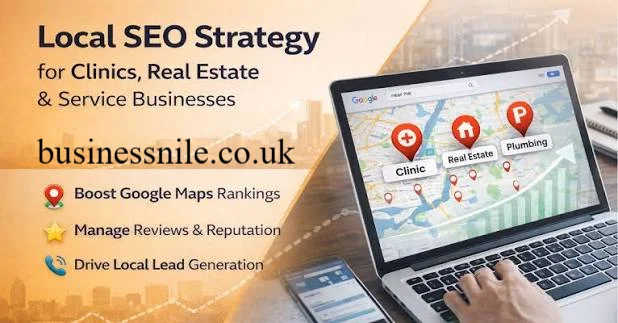
Local SEO gets a business into the map pack and the results near the searcher. Content is what gives search engines reasons to show you and gives people reasons to call. Most local businesses publish content that is either too generic to rank or too promotional to help anyone. This guide shows how to build a content plan around real customer questions, real locations, and measurable leads.
What Is a Local Content Strategy?
A local content strategy is a plan for creating and distributing content that helps people in a specific area find, trust, and choose your business. It differs from general content marketing in three ways:
- Geography shapes topics. You write for a city, neighborhood, or service area, not a national audience.
- Trust signals matter more. Reviews, accurate business information, and local proof carry weight.
- Success means offline action. Phone calls, direction requests, bookings, and form submissions matter more than raw website traffic.

Why Does Content Matter for Local SEO?
Content matters because it supplies the relevance that search engines look for. Google’s own guidance says local results are based mainly on relevance, distance, and prominence. You can’t change where a searcher is standing, but content improves the other two factors:
- Relevance: Service pages and articles tell search engines what you do and where you do it.
- Prominence: Helpful content earns links, mentions, reviews, and shares that signal that your business is well known.
There is also a conversion benefit. Someone comparing three plumbers will usually pick the one whose site answers their questions clearly.
How Do You Define Local SEO Goals?
Start with the business outcome, then work backward to content. A goal such as “publish more blog posts” says nothing about results. Better examples:
- Increase calls from the three suburbs where you want more jobs.
- Get more booked consultations from “near me” style searches.
- Improve visibility for your two most profitable services.
Pick one primary conversion (phone calls, form submissions, or in-person visits) and set up tracking for it before you publish anything. Every content decision below should connect to that goal. boulderseomarketing.com
How Do You Understand Your Local Audience?
Learn what local customers ask before, during, and after they buy. You don’t need expensive tools for audience research. Use these sources:
- Calls, emails, and chat logs: note the questions your team answers repeatedly.
- Your Google Business Profile reviews and your competitors’ reviews, which reveal what people value and what frustrates them.
- Google’s autocomplete and “People also ask” boxes for your service plus your city.
- Local Facebook groups, Nextdoor, and Reddit threads for neighborhood-specific concerns.
Sort what you find by marketing funnel stage. Early-stage people ask “how much does a roof repair cost?” Late-stage people search “emergency roofer open today.” Your content needs to cover both.
How Do You Find Local Keywords and Topics?
Combine a service, a place, and a customer need. Local keyword research is less about volume and more about intent. A search with 20 monthly queries can be worth more than a broad term if it comes from someone ready to hire.
Build your list in layers:
- Core services: the pages that earn revenue.
- Geographic modifiers: city keywords, neighborhoods, and landmarks you actually serve.
- Question phrases: “how much,” “how long,” “is it worth it,” “who does.”
- Local context: permits, weather, building styles, regulations, or seasonal issues unique to your area.
Check search intent by searching each term yourself. If Google shows a map pack and service pages, you need a service page. If it shows guides and forums, you need an informational post. Matching the format is as important as the keyword.
Tools like Semrush, Ahrefs, and Google Keyword Planner can help with volume and competitor gaps, and Google Search Console shows which queries already bring impressions.
Which Content Formats Work Best for Local Businesses?
Service pages and location pages come first, and everything else supports them. Here is how the main formats compare:
| Format | Best for | Local SEO purpose |
|---|---|---|
| Service pages | High-intent searches | Rank for “service + city” terms and convert |
| Location pages | Multi-location or wide service areas | Show relevance to each place |
| Blog posts | Questions and research-stage searches | Build topical authority and internal links |
| Case studies | Comparison-stage buyers | Prove results with local projects |
| Videos | Complex or visual services | Increase engagement and earn video results |
| Social posts and newsletters | Existing audience | Keep your business top of mind and drive repeat visits |
One caution about location pages: copying the same text and swapping the city name creates thin, near-duplicate pages. Each page needs unique information, such as local project photos, neighborhood details, staff who serve that area, and reviews from customers there.
How Do You Create a Local Content Plan?
Build a content roadmap around your most profitable services, then fill gaps with supporting questions. A simple process:
- Audit what exists. List every page and note which service or place it targets.
- Prioritize by revenue and intent. Fix or create service pages before writing blog posts.
- Assign each piece one topic and one conversion. For example: “Water heater replacement in [city]” leads to a quote request.
- Build a content calendar. Include seasonal moments, local events, and weather-driven demand.
- Link intentionally. Connect blog posts to the relevant service page, and link related posts to each other. Strong internal linking helps search engines understand which pages matter most.
Consistency matters more than volume. A small business that publishes one genuinely useful piece every two weeks will usually outperform one that publishes five thin posts in a burst and then goes quiet.
On-page basics apply to every piece: a clear title with the main topic, a descriptive URL, helpful headings, original images with alt text, and a visible call to action.
How Do You Build Local Signals Around Your Content?
Content works best when it sits on top of accurate, consistent business information. Strengthen these local signals alongside publishing:
- Google Business Profile: Choose accurate categories, list services, add photos, and post updates regularly.
- Name, address, and phone consistency: Your details should match across your website, directories, and other business listings.
- Online reviews: Ask every satisfied customer and respond to every review. Natural review language often mentions services and locations, which reinforces relevance.
- Local links and mentions: Chambers of commerce, sponsorships, local news, and partner businesses.
- Schema markup: LocalBusiness structured data helps search engines read your details.

How Do You Promote Local Content?
Distribute each piece where local customers already spend time. Publishing alone rarely moves rankings. Try these tactics:
- Share posts in your Google Business Profile updates and on social media.
- Send helpful guides to your newsletter. Email marketing is one of the few channels you fully own.
- Offer a local organization, school, or nonprofit a resource or a guest article in exchange for a link.
- Turn a long guide into a short video, a checklist, and several social posts.
- Give customers relevant links in follow-up emails and quotes.
How Do You Measure Content Performance?
Track business actions first, rankings second. Useful signals include:
- Calls and form submissions (set up call tracking and conversion events in Google Analytics 4).
- Google Business Profile actions: calls, website clicks, and direction requests.
- Search Console data: impressions and clicks for local queries by page.
- Local rank tracking at the neighborhood level, since results vary by searcher location.
- Lead quality: whether leads match your target customers and convert to sales.
Review results quarterly. Refresh pages that rank on page two, merge overlapping posts, and expand pages that convert well.
What Are the Most Common Local Content Mistakes?
- Writing for search engines instead of customers.
- Publishing near-duplicate city pages.
- Naming areas you don’t actually serve.
- Ignoring reviews and listing accuracy.
- Skipping calls to action.
- Never updating old pages, so prices, hours, and regulations go stale.
Frequently Asked Questions
What are some free content marketing strategies for local SEO?
Claim and complete your Google Business Profile, answer customer questions in blog posts, ask for reviews, share content in local social groups, and request links from partners and local organizations. All of these cost time rather than money.
What are the best content marketing stratgies for local SEO?
The strongest approach combines optimized service pages, location-specific content with unique detail, regular review generation, consistent business listings, and promotion through email and social channels. Start with the pages closest to revenue.
What are the most effective local SEO tactics?
Optimize your Google Business Profile, keep name, address, and phone details consistent, earn reviews, build service and location pages, and gain local links. Then track calls and direction requests to see what works.
What should a local SEO article include?
It should answer a specific customer question, mention the relevant area naturally, link to the related service page, show local experience or examples, and end with a clear next step.
What is local SEO?
Local SEO (sometimes written “localseo”) is the practice of improving visibility in location-based searches, such as map results and “near me” queries, so nearby customers can find your business.
Why is local SEO important?
Many searches carry local intent, and the businesses shown first tend to get the calls and visits. Local SEO puts you in front of people who are already looking for what you offer, close to where you operate.
Can Semrush help with local SEO?
Yes. Semrush offers local tools for listing management, map rank tracking, and review monitoring, along with keyword research and competitor analysis. Check Semrush’s current plans, since features and pricing change.
What is on-page SEO for a local business?
On-page SEO covers the elements on your own pages: title tags, headings, copy, images, internal links, schema markup, and your business details. For local pages, it also means clearly stating your service and location.
How often should a local business publish content?
Aim for a pace you can sustain, such as one or two quality posts a month, and update key service pages whenever details change. Quality and usefulness matter more than frequency.
Can small businesses manage local SEO content themselves?
Yes. Small businesses can handle the basics: profile setup, reviews, service pages, and customer-question posts. A local agency becomes useful when you need technical audits, link building, or support across several locations.
Author Bio: Hamid Ali is a digital marketing and SEO writer specializing in local SEO, content strategy, and search optimization. He creates practical, research-driven content that helps local businesses improve visibility, attract qualified leads, and grow online.
Author Name: Hamid Ali
Email: johanharwen314@gmail.com
Also Read: