You can check your federal refund status through your IRS online account, the refund tracker on IRS.gov, the IRS app, or the automated hotline at 800-829-1954. You need your Social Security number or ITIN, your filing status, and the exact refund amount from your return. Most e-filed refunds arrive within about three weeks.
The rest of this guide covers what the status messages mean, why refunds stall, and the steps to take when something goes wrong.
How do I check my refund status?
There are four official routes. All of them show the same IRS data, so pick whichever is most convenient.
1. Your IRS online account. Signing in gives you refund status, tax records, and amended return status in one place. The IRS has also added refund email notifications to the account. This is the best option if the anonymous tracker keeps rejecting your details.
2. The refund tracker (no sign-in). Enter these four items from your return:
- Social Security number or ITIN
- Filing status (single, married filing jointly, and so on)
- Tax year
- The exact refund amount, in whole dollars
3. The IRS app. It runs the same lookup on your phone. It was formerly called IRS2Go, and many guides still use that name.
4. The automated hotline. Call 800-829-1954 for refund status or 866-464-2050 for amended returns. Have your return in front of you.
A common stumbling block: the refund amount must match line for line what appears on your return. If the IRS adjusted your return or you amended it, the number can differ, and the tracker may fail. Your online account avoids this problem. If you’ve misplaced your return, you can view your transcript in the account or request one by mail.
When will my status show up?
According to the IRS, status is available 24 hours after you e-file a current-year return, three days after e-filing a prior-year return, and four weeks after mailing a paper return.
Availability is not the same as payment. Here is how long refunds typically take:
| How you filed | Typical wait for your refund |
|---|---|
| E-filed | About 3 weeks |
| Mailed paper return | 6 weeks or more from IRS receipt |
| Amended return | Up to 16 weeks (can take 3 weeks just to appear) |
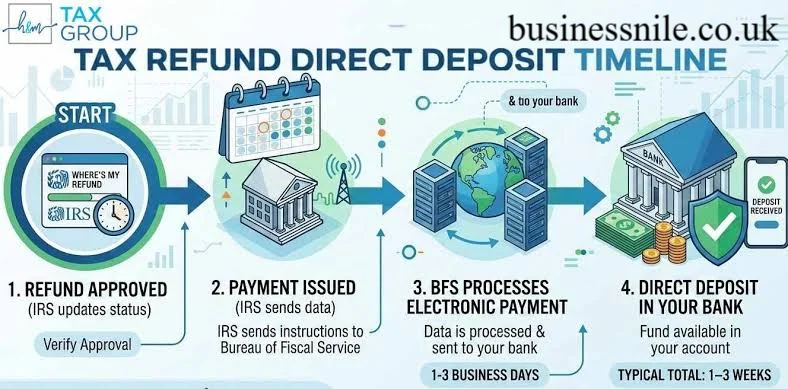
The IRS has said most refunds from error-free electronic returns are issued within 21 days, while paper returns typically take six weeks or longer. Treat 21 days as a typical result rather than a promise. Calling earlier than that won’t speed anything up, because phone agents see the same information you do.
Timing for 2026. If you’re reading this in October 2026, you’re probably in one of two groups. Either you filed a 2025 return on extension (the extended deadline is October 15, 2026), or your refund from earlier this year is still unresolved. Extension filers should expect the same e-file timelines, with no shortcut for filing late. Anyone whose return was filed months ago and who still has no refund should skip to the delay section below.
What do the tracker’s status messages mean?
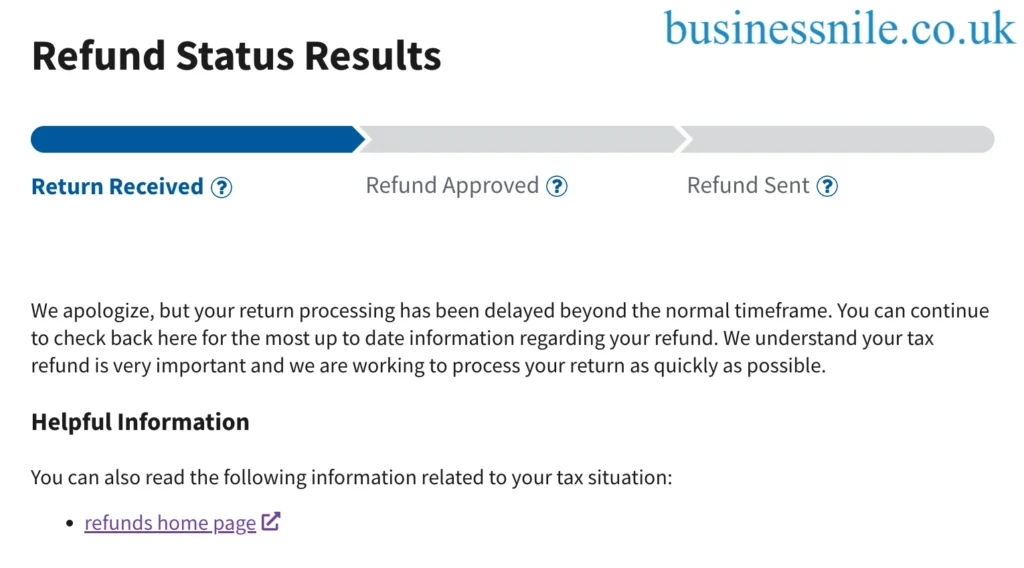
The tracker shows three stages:
- Return Received. The IRS has your return and is processing it.
- Refund Approved. Your refund amount is confirmed, and the IRS is preparing to send it.
- Refund Sent. The money has been issued to your bank or by another method. Banks can take a few days to post it.
A message saying your return is still being processed isn’t automatically bad news. The IRS uses it in routine situations too. Worry only if it persists well past the normal window or a notice arrives.
Why is my refund delayed?
Delays usually come from one of these causes:
- Return errors. Forgetting a signature, a mathematical error, a wrong Social Security number, or a wrong filing status all force manual review.
- Income mismatch. If the figures on your return don’t match W-2 or 1099 data reported to the IRS, the return may be held for review.
- EITC or ACTC claims. By law, refunds that include the Earned Income Tax Credit or the Additional Child Tax Credit aren’t released until mid-February. For the 2026 season, reporting based on IRS guidance put updated status for most early EITC and ACTC filers around February 21, with refunds expected by March 2 for clean e-filed returns with direct deposit.
- Identity verification. The IRS may mail Letter 5071C if it suspects someone else is using your information. Don’t ignore it. Follow the letter’s instructions to confirm your identity, and your refund stays frozen until you do.
- Injured spouse claim. These are processed manually and take longer.
- Paper filing. Mailed returns are processed by hand and take the longest of any method.
- Rejected bank details. Incorrect account numbers can freeze a payment until you correct them.
When to act: If the IRS needs something from you, it will send an IRS notice or letter by mail. Respond using the instructions in that letter. If you haven’t received a notice and your e-filed return is more than 21 days old, you can call the IRS.
Why is my refund smaller than expected?
A refund can be reduced to cover back taxes or certain past-due debts. These include child support, federal nontax debt, and state income tax. This is called a refund offset, and the Bureau of the Fiscal Service (BFS) handles it. BFS will mail you a notice about the offset, and the IRS doesn’t receive the details of the debt. To dispute or ask about the debt itself, contact the agency named in that notice. Student loan debt in default is a common trigger.
If you filed jointly and only one spouse owes the debt, the other spouse may file for injured spouse relief to recover their share.
What if I get a refund I didn’t expect?
Sometimes the IRS corrects your return and increases your refund, and it mails a notice explaining the change. If you believe the money was sent in error or you aren’t entitled to it, you must promptly return the erroneous refund, following IRS Topic 161. Keeping it can lead to penalties and interest later.
How are refunds paid now, and what if the money is missing?
Direct deposit is the default. The IRS is phasing out paper refund checks, though it still issues them when necessary. Taxpayers without a bank account can receive refunds on a prepaid debit card or in a digital wallet. The agency reported that 93% of individual refunds, about 93.5 million payments, went out by direct deposit in 2025. If you don’t set up direct deposit, expect delays or an alternative payment method.
If your bank details were wrong or rejected, the IRS may freeze the refund until you update them. Check your online account for instructions and fix the information as soon as you see a notice.
If a check is lost or stolen, request a refund trace.
Before you start: confirm the IRS has issued the refund, then wait the full four weeks it takes for a check to arrive.
How to start the trace:
- Single, married filing separately, or head of household: use the refund tracker or IRS app (current-year refunds only), or call 800-829-1954.
- Married filing jointly: call 800-829-1040 or send Form 3911, Taxpayer Statement Regarding Refund.
After the request:
- If the check was never cashed, the IRS cancels it and mails a replacement, typically within four weeks.
- If someone cashed it, BFS mails you a claim package and a copy of the cashed check. Review of your claim can take up to six weeks.
Where’s my amended return?
Amended returns follow a separate, slower path. The IRS has said they can take up to three weeks to appear in its system and as long as 16 weeks to process. Track yours through the “Where’s My Amended Return?” tool, your online account, or the 866-464-2050 hotline. Don’t file a second amendment while the first is pending, since it only complicates the review.
How can I avoid delays next time?
Based on the causes above, these habits help the most:
- E-file and choose direct deposit.
- Double-check Social Security numbers, bank account numbers, and filing status before submitting.
- Compare your income entries with your W-2 and 1099 forms.
- Keep a copy of your return so you have the exact refund amount handy.
- Create your IRS online account before you need it.
Be wary of messages claiming to be the IRS. The agency’s first contact is normally a letter by mail, so treat unexpected texts or emails asking for refund details as scams, and report them through IRS.gov.

Frequently Asked Questions
How do I check my refund status?
Use your IRS online account, the refund tracker on IRS.gov, the IRS app, or the hotline at 800-829-1954. You’ll need your Social Security number or ITIN, filing status, tax year, and exact refund amount. Status is available 24 hours after e-filing or four weeks after mailing a paper return.
Where’s my state refund?
The IRS tracker only covers federal refunds. State refunds come from your state’s tax agency, which has its own status tool and timelines. Search for your state’s department of revenue and use its refund lookup.
Is there an IRS refund status tool for a stimulus check?
The refund tracker covers regular tax refunds. If the government authorizes a special payment, the IRS would announce how to track it on IRS.gov. Be cautious of anyone offering a “stimulus check” through a text or link.
Where’s my amended return?
Use the “Where’s My Amended Return?” tool, your IRS online account, or call 866-464-2050. Allow up to three weeks for it to appear and up to 16 weeks for processing.
Is there a Where’s My Refund app?
Yes. The official IRS app lets you check status on your phone with the same information the website uses.
What is the IRS refund schedule for 2026?
For the 2026 season, the IRS began accepting 2025 returns on January 26, and most e-filed returns with direct deposit were issued within about 21 days. The regular deadline was April 15, 2026, and extension filers have until October 15, 2026. Returns for tax year 2026 will be filed in 2027, and the IRS announces that season’s start date in advance.
What is the IRS Where’s My Refund number?
Call 800-829-1954 for refund status and 866-464-2050 for amended returns. For a refund trace on a joint return, call 800-829-1040.
What is the latest on IRS refund delays?
Delays now mostly come from errors, identity verification, credit reviews, rejected bank details, and paper filing. Check your online account first, watch your mail for an IRS letter, and call only if 21 days have passed since e-filing or the notice tells you to.
Author Bio: Hamid Ali is a finance and tax writer who covers U.S. tax refunds, IRS updates, personal finance, and practical money matters. He focuses on clear, accurate, and easy-to-follow guidance to help readers understand complex financial topics.
Author Name: Hamid Ali
Email: johanharwen314@gmail.com
Also Read: