A franchisor is the company that owns the brand and the business system. A franchisee is the person or company that pays for the right to operate a location under that brand and follows the franchisor’s rules. The franchisor builds and protects the model, and the franchisee runs it day to day and carries the local risk.
That one-line answer hides a lot of detail. The two sides share a brand but not the same finances, workload, or legal exposure. If you’re weighing a franchise investment or just trying to understand how a chain works, the sections below cover what each party owns, pays, and controls.
What Is a Franchisor?
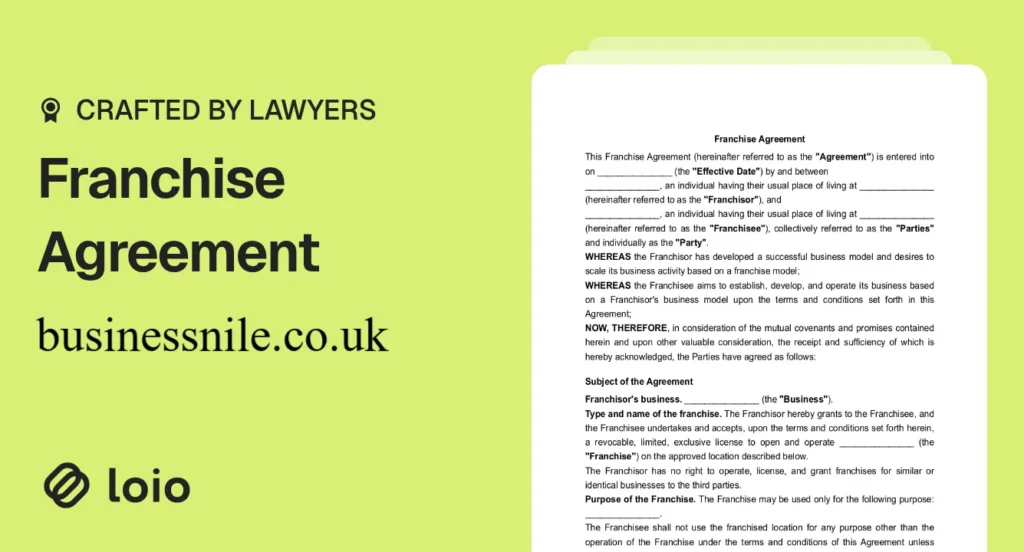
A franchisor is the brand owner. It created the business concept and owns the intellectual property behind it: trademarks, logos, proprietary recipes or methods, and sometimes patents and trade secrets. It packages these assets into a repeatable franchise system and grants others a franchise license to use them.
Well-known franchisors include McDonald’s, Subway, Dunkin’, 7-Eleven, Hilton, RE/MAX, Anytime Fitness, and The UPS Store. Their products have little in common, but all of them sell the right to operate a proven concept rather than only selling goods to customers.
What Is a Franchisee?
A franchisee is the business operator who buys that right. Franchisees fund the outlet, hire the team, and manage daily operations. The brand is borrowed, but the investment, the lease, the payroll, and the daily effort are the franchisee’s own.
Pronunciation and plural: Franchisee is pronounced fran-chy-ZEE, and the plural is simply franchisees.
Franchisee vs Franchisor: The Main Difference
The core difference is ownership of the system versus ownership of the outlet. The franchisor owns the brand and the playbook. The franchisee owns the operating business at one location (or several) but only holds a license to the brand.
| Franchisor | Franchisee | |
|---|---|---|
| Owns | Brand, trademarks, systems | The local business entity, lease, equipment |
| Pays | Costs of building and supporting the network | Initial franchise fee, ongoing royalties, build-out and operating costs |
| Earns from | Fees, royalties, sometimes product sales | Customer revenue after all expenses |
| Controls | Standards, approved suppliers, brand direction | Staffing, local service, day-to-day execution |
| Main risk | Brand damage if outlets underperform | Capital loss if the outlet fails |
How Does a Franchise Relationship Work?
The relationship is built on a contract, the franchise agreement, and in the U.S. it begins with a disclosure document. Here is the typical path:
- Disclosure. Under the FTC Franchise Rule, the franchisor must give prospects a Franchise Disclosure Document (FDD) at least 14 calendar days before they sign or pay. The FDD covers 23 standard items, including fees, litigation history, estimated initial investment (Item 7), and, if the franchisor chooses to provide them, financial performance representations (Item 19).
- Signing. The franchisee signs the agreement and pays the initial franchise fee.
- Setup. The franchisor helps with site selection, training, and the opening.
- Operation. The franchisee runs the outlet according to the operations manual and pays ongoing royalties.
- Term and renewal. Most agreements run for a fixed term, often ten years or more, and renewal depends on the agreement terms and the franchisee’s performance.
In the UK, there is no franchise-specific disclosure law like the FTC rule. Prospective franchisees rely on contract law, general consumer rules, and industry guidance, which is why accreditation by the British Franchise Association is often treated as a useful credibility check.
Role of the Franchisor
The franchisor’s job is to make the model repeatable and keep the brand worth paying for. In practice that means:
- Developing and protecting the brand, trademarks, and operating systems
- Writing the operations manual and setting franchise standards
- Providing initial franchise training and ongoing field support
- Running national or regional marketing and managing quality control
- Vetting suppliers and negotiating purchasing terms
- Recruiting new franchisees and managing network expansion
Role of the Franchisee
The franchisee turns the system into a working local business:
- Funding the opening and keeping enough working capital to survive the early months
- Following operating procedures and brand standards
- Handling staff recruitment, scheduling, and payroll
- Managing stock, controlling costs, and producing accurate financial reporting
- Delivering customer service that protects the brand’s reputation
- Running local marketing in the franchise territory
Franchisor vs Franchisee Responsibilities at a Glance
The easiest way to see the split is by function:
- Brand and marketing strategy: franchisor sets it; franchisee supports it locally.
- Training: franchisor designs and delivers it; franchisee attends and applies it.
- Hiring and daily management: franchisee, within franchisor guidelines.
- Supply chain: franchisor specifies approved suppliers; franchisee orders and manages inventory.
- Compliance and quality: franchisor audits; franchisee maintains standards.
- Profit and loss: entirely the franchisee’s responsibility.
That last point surprises many first-time buyers. Franchisor support is real, but it doesn’t guarantee profit.
Who Owns the Franchise Business?
Short answer: Both own different things. The franchisor owns the brand, trademarks, and system. The franchisee owns the individual business unit, including its assets, lease, and day-to-day operations, but only for as long as the franchise agreement allows.
This distinction matters at exit. Franchisees can usually sell their outlet, but the franchisor typically has approval rights over the buyer and may charge a transfer fee. You are selling the business’s value, not the brand itself.
Who Pays Franchise Fees?
Short answer: The franchisee pays all of them. Franchise fees flow from franchisee to franchisor. They typically include:
- Initial franchise fee: A one-time payment for the license and onboarding, which varies widely by brand.
- Ongoing royalties: Usually a percentage of gross sales, though some brands charge a flat amount. Rates differ by brand, so check Item 6 of the FDD.
- Marketing levy: A contribution to a shared advertising fund.
- Other charges: Technology, training, renewal, or transfer fees.
Remember that fees are only part of the capital investment. Build-out, equipment, inventory, and insurance can far exceed the franchise fee, and Item 7 gives the franchisor’s estimated range. Because royalties come off the top of sales rather than profit, a location with thin margins can feel the squeeze even when revenue looks healthy. That is why cash flow forecasting deserves as much attention as the brand name.
What Support Does a Franchisor Provide?
Support typically includes pre-opening training, help with site selection and design, the operations manual, field visits from business consultants, marketing materials, and technology platforms. Quality varies a lot between systems. When researching, ask current and former franchisees how responsive field support actually is. Many franchisors also run an advisory council where franchisees give feedback on policy, which can be a good sign of a healthy franchise partnership.
Franchisee and Franchisor: Advantages and Disadvantages
| Advantages | Disadvantages | |
|---|---|---|
| Franchisee | Proven model, brand recognition, training, shared purchasing power, lower failure uncertainty than starting from scratch | Ongoing royalties, limited freedom, contract restrictions, personal financial risk, dependence on franchisor decisions |
| Franchisor | Faster expansion using other people’s capital, steady royalty income, motivated local owner-operators | Less direct control than company-owned stores, brand risk from weak operators, legal and compliance costs, disputes with franchisees |
Original take: The relationship works best when incentives line up. Royalties based on sales reward franchisors for growth in revenue, while franchisees care about profit after costs. When a franchisor pushes new fees, mandatory remodels, or supplier mandates, that gap can turn into conflict. Reading the franchise agreement terms with this tension in mind will tell you more than any sales brochure.
How to Build a Successful Franchise Relationship
For franchisees:
- Read the full FDD and have a franchise attorney review it before signing.
- Speak to at least several current and former franchisees listed in the FDD.
- Build a conservative cash flow plan with a working capital cushion.
- Understand territory rights, renewal conditions, and exit rules.
- Follow the system first, then suggest improvements through proper channels.
For franchisors:
- Be transparent about costs and realistic about results.
- Invest in field support and training, not only in recruitment.
- Listen through formal feedback channels.
- Enforce standards consistently across the network.

Franchisee vs Franchisor FAQs
What is a franchisor vs franchisee example?
McDonald’s Corporation is the franchisor: it owns the brand, menu, and operating system. An independent owner who runs a McDonald’s restaurant under a franchise agreement is the franchisee, who employs the staff and manages the restaurant while paying fees to the corporation.
What are some franchisor examples?
Common franchisor examples include McDonald’s, Subway, Dunkin’, 7-Eleven, Hilton, RE/MAX, Anytime Fitness, and The UPS Store.
What does franchisee mean? (with an example)
A franchisee is a person or company that buys the right to operate a business under another company’s brand and system. For example, someone who opens a Dunkin’ shop under a franchise agreement is a Dunkin’ franchisee.
What is the plural of franchisee?
The plural is franchisees.
How do you pronounce franchise, franchisor, and franchisee?
Franchise is FRAN-chyz. Franchisor is FRAN-chy-zor (some say fran-chy-ZOR). Franchisee is fran-chy-ZEE.
Are there court cases involving franchisees and franchisors?
Yes. Two frequently cited U.S. examples:
- Burger King Corp. v. Rudzewicz (U.S. Supreme Court, 1985): The Court held that a franchisee who entered a long-term relationship with a franchisor could be sued in the franchisor’s home state, based on the contract and course of dealing.
- Patterson v. Domino’s Pizza, LLC (California Supreme Court, 2014): The court found that a franchisor was not automatically liable for a franchisee employee’s conduct unless it controlled day-to-day operations, such as hiring and supervision.
Joint-employer standards have also been contested, so check current rules with a franchise attorney. This is general information, not legal advice.
What are the advantages and disadvantages for each side?
Franchisees gain a proven brand and support but pay ongoing fees and accept limited independence. Franchisors gain faster growth using franchisee capital and steady royalties but give up some direct control and face brand risk if operators underperform.
Author Bio: Hamid Ali is a business writer covering franchising, entrepreneurship, startups, and small business management. He creates clear, research-based guides that help readers understand franchise models, business ownership, and growth strategies.
Author Name: Hamid ALi
Email: johanharwen314@gmail.com
Also Read: