Introduction
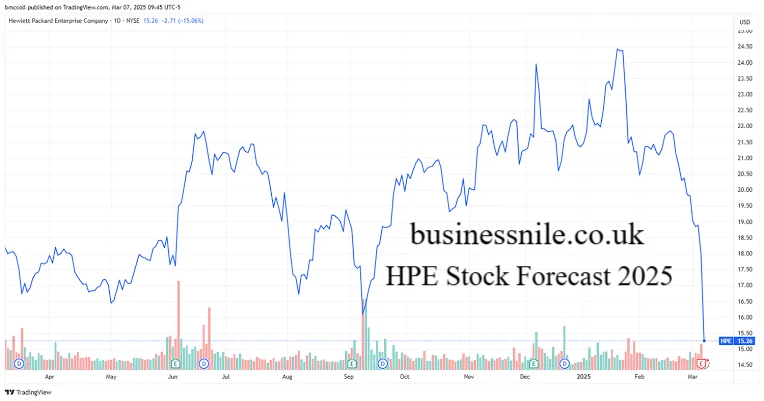
If you have been tracking tech stocks this year, you have probably typed “hpe stock forecast 2025” into a search bar at least once. Hewlett Packard Enterprise, listed on the NYSE under the ticker HPE, has been one of the more talked about names in the AI infrastructure race. Investors wanted to know if HPE could ride the AI wave the way Nvidia and other chipmakers did, or if it would struggle under margin pressure and integration headaches.
This article breaks down the full picture. We will look at the original HPE stock forecast 2025 numbers, the factors that shaped that outlook, whether Wall Street felt bullish or cautious, and what actually happened when fiscal 2025 wrapped up. By the end, you will understand exactly how the forecast compared to reality and what it means for HPE heading into 2026.
What Was The HPE Stock Forecast For 2025
When HPE entered fiscal 2025, the company guided for revenue growth of 7 percent to 11 percent and non-GAAP earnings per share between $1.70 and $1.90. That was the baseline HPE stock forecast 2025 figure that analysts used to build their price targets and ratings.
This guidance reflected a company betting heavily on artificial intelligence servers while still managing legacy hardware businesses that were growing much slower. Analysts covering HPE largely built their models around this range, adjusting up or down depending on how they viewed the Juniper Networks deal and broader server demand.
Quick Snapshot
- Revenue growth guidance: 7 percent to 11 percent
- Non-GAAP EPS guidance: $1.70 to $1.90
- Key growth driver: AI server orders
- Key risk factor: margin compression and tariffs
What Drove The HPE Outlook
The HPE stock forecast 2025 was not built on a single product line. It rested on four major pillars.
AI Servers
HPE’s AI systems business became the headline story of the year. Enterprises and cloud providers kept ordering GPU based servers, and HPE positioned itself as a key supplier alongside bigger names in the space. Every quarter, investors watched the AI order backlog closely because it was treated as a leading indicator for future revenue.
Cloud And Hybrid IT
HPE GreenLake, the company’s hybrid cloud platform, gave HPE a subscription style revenue stream that Wall Street likes because it is more predictable than one time hardware sales. Growth here supported the higher end of the HPE stock forecast 2025 range.
Networking
Networking was arguably the most transformative piece of the story. HPE closed its acquisition of Juniper Networks during the year, and that deal reshaped the networking segment almost overnight. Analysts had to rework their models once the acquisition closed because it changed both revenue mix and cost structure.
Hybrid IT And Legacy Servers
Traditional server and storage revenue remained a mixed bag. This slower growing segment acted as a drag on overall numbers even while AI systems accelerated, which is part of why the guidance range was so wide.
Was HPE Stock Bullish In 2025
Honestly, sentiment around HPE stock was mixed for most of the year. I would not call it a clean bullish story, and I would not call it a bearish one either.
On one side, AI demand gave bulls plenty to like. Order backlogs grew, and management kept reaffirming confidence in long term AI infrastructure spending. On the other side, several concerns kept a lid on enthusiasm.
- Margin pressure from competitive pricing on AI servers
- Rising competition from Dell, Cisco, and other infrastructure vendors
- Tariff related cost uncertainty affecting hardware supply chains
- Integration risk tied to the massive Juniper Networks acquisition
- Investor skepticism about whether legacy hardware could keep pace
Because of these crosscurrents, the HPE stock forecast 2025 discussion among analysts often included both upgrade and downgrade notes within the same quarter. That kind of back and forth is normal for a company mid transformation, but it made HPE a stock that rewarded patience rather than quick trades.
HPE Stock Forecast 2025 Versus Actual Results
Here is where the story gets interesting. Forecasts are educated guesses. Results are facts. Let us compare them directly.
| Metric | Original Guidance | Actual FY2025 Result |
|---|---|---|
| Full Year Revenue Growth | 7 percent to 11 percent | 14 percent year over year |
| Q4 Revenue | Not specifically guided | $9.7 billion |
| Q4 Non-GAAP EPS | Within $1.70 to $1.90 full year range | $0.62 for the quarter |
| Full Year Revenue | Implied around $32 billion range | $34.3 billion |
| Networking Revenue Growth | Expected to rise post Juniper | Up 51 percent for the year |
By the end of fiscal 2025, HPE actually outperformed the low end of its original HPE stock forecast 2025 revenue guidance. Fourth quarter revenue hit $9.7 billion, up 14 percent year over year, and non-GAAP EPS for the quarter came in at $0.62, beating what analysts had modeled. Full year revenue reached $34.3 billion, and networking revenue jumped 51 percent thanks largely to the Juniper acquisition finally showing up in the numbers.
Free cash flow also came in strong, giving management enough confidence to raise fiscal 2026 guidance right after closing the books on 2025. That is a meaningful signal because companies rarely raise forward guidance unless they trust their own momentum.
An Important Distinction You Should Know
Here is something that trips up a lot of readers. HPE’s fiscal year 2025 ended on October 31, 2025, not December 31. So when you search “hpe stock forecast 2025,” you might land on two very different types of content.
- Forecasts published earlier in 2025 predicting how the year would unfold
- Actual results reported near the end of calendar 2025 once fiscal 2025 closed
Both are technically correct answers to the same search phrase, which is exactly why this article separates the original guidance from the confirmed results. If you only read one section, make it this one, because confusing a prediction with a confirmed outcome can lead to bad investment decisions.
Key Takeaways For Investors
If you are still weighing HPE as part of your portfolio, keep these points in mind.
- The original HPE stock forecast 2025 called for moderate single digit to low double digit growth, and the company beat that.
- AI server demand was the single biggest swing factor throughout the year.
- The Juniper Networks acquisition turned out to be a net positive for networking revenue.
- Margin pressure and tariffs remained real risks even as results improved.
- Raised fiscal 2026 guidance suggests management sees continued momentum, not a one time bump.
None of this guarantees future performance. Stock forecasts, even accurate ones, are not promises. But HPE’s trajectory through 2025 gives investors a clearer picture of how the company is executing on its AI and networking strategy.
Conclusion
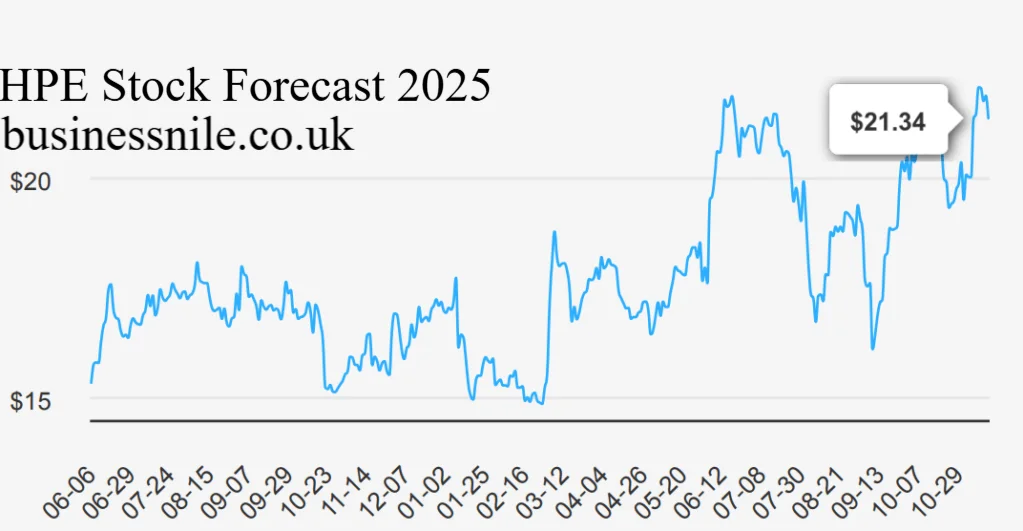
The HPE stock forecast 2025 story ended up being a genuine beat and raise situation. The company guided for 7 percent to 11 percent revenue growth and non-GAAP EPS between $1.70 and $1.90, then closed the year with 14 percent revenue growth, $34.3 billion in total revenue, and strong free cash flow. AI servers, cloud demand, and the Juniper Networks integration all played a part in pushing results above the original targets, even while margin pressure and competition kept the stock story from being a straightforward bull run.
If HPE keeps executing the way it did in fiscal 2025, the next set of forecasts heading into 2026 and beyond could carry even more weight. What do you think, is HPE positioned to keep this momentum going, or will competition catch up? Feel free to share your thoughts or pass this article along to anyone tracking HPE stock.
Frequently Asked Questions
What was the original HPE stock forecast for 2025? HPE guided for revenue growth of 7 percent to 11 percent and non-GAAP EPS between $1.70 and $1.90 for fiscal 2025.
Did HPE beat its 2025 guidance? Yes. Full year revenue grew 14 percent to $34.3 billion, which was above the original guided range.
What drove HPE stock in 2025? AI server demand, cloud growth through GreenLake, and the Juniper Networks acquisition were the main drivers behind HPE’s performance.
Was the Juniper Networks acquisition good for HPE? Based on fiscal 2025 results, yes. Networking revenue rose 51 percent for the year, largely due to Juniper’s contribution.
What was HPE’s Q4 fiscal 2025 revenue? HPE reported $9.7 billion in fourth quarter revenue, up 14 percent year over year.
What was HPE’s Q4 fiscal 2025 EPS? Non-GAAP EPS for the fourth quarter came in at $0.62.
Why does HPE’s fiscal year differ from the calendar year? HPE’s fiscal 2025 ended October 31, 2025, which means results for the year were reported in December 2025, ahead of the calendar year end.
Is HPE stock a good buy after these 2025 results? That depends on your own research and risk tolerance. Strong AI and networking growth are positives, but margin pressure and competition remain factors worth watching. This article is for informational purposes and is not financial advice.
What is HPE’s guidance for fiscal 2026? HPE raised its fiscal 2026 outlook, guiding for non-GAAP EPS between $2.25 and $2.45 and revenue growth of 17 percent to 22 percent.
Where can I find updated HPE stock forecasts? Financial news sites, brokerage research reports, and HPE’s own investor relations page are good places to track updated forecasts and quarterly results.
businessnile.co.uk
Author Name: Hamid Ali
Email: johanharwen314@gmail.com
About The Author: Hamid Ali is a financial content writer who focuses on making stock market topics easy to understand for everyday readers. He enjoys breaking down earnings reports and analyst forecasts into clear, practical insights that help investors make sense of complex market news.