What Is a Peer-to-Peer Marketplace? Everything You Need to Know About P2P Buying and Selling

Introduction
A peer-to-peer (P2P) marketplace is an online platform that connects individual buyers and sellers directly, allowing them to trade products or services without relying on traditional retailers. From buying second-hand goods and handmade products to renting properties and offering freelance services, P2P marketplaces have transformed the way people buy and sell online. In this guide, you’ll learn what a peer-to-peer marketplace is, how it works, its key benefits and risks, popular examples, and practical tips to help you buy or sell safely and confidently in today’s digital economy.
What Is a Peer-to-Peer Marketplace? A Clear Definition
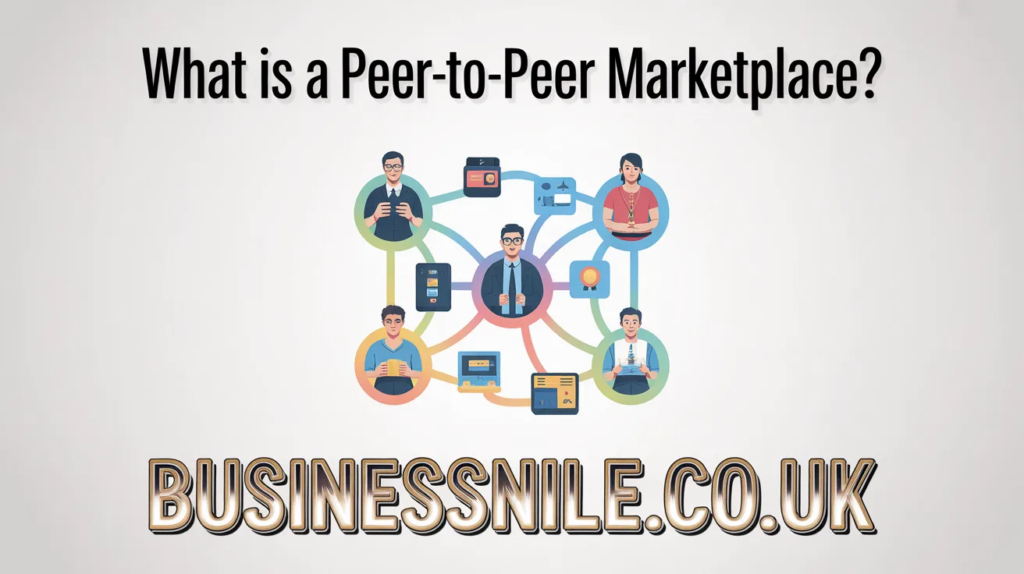
A peer-to-peer (P2P) marketplace is a digital platform where individuals buy, sell, trade, or rent goods and services directly with each other. The platform itself does not own the inventory. It simply provides the infrastructure, trust mechanisms, and payment tools that make transactions possible.
Think of the platform as a digital town square. Sellers set up their stalls. Buyers browse and purchase. The platform manages the rules, safety, and payments. Nobody needs a physical store, a warehouse, or a corporate supply chain.
This is fundamentally different from a traditional marketplace, where a company like Amazon stocks and sells its own products. In a P2P marketplace, the platform has no products of its own. Every listing belongs to a real person.
The Three Key Players in Any P2P Marketplace
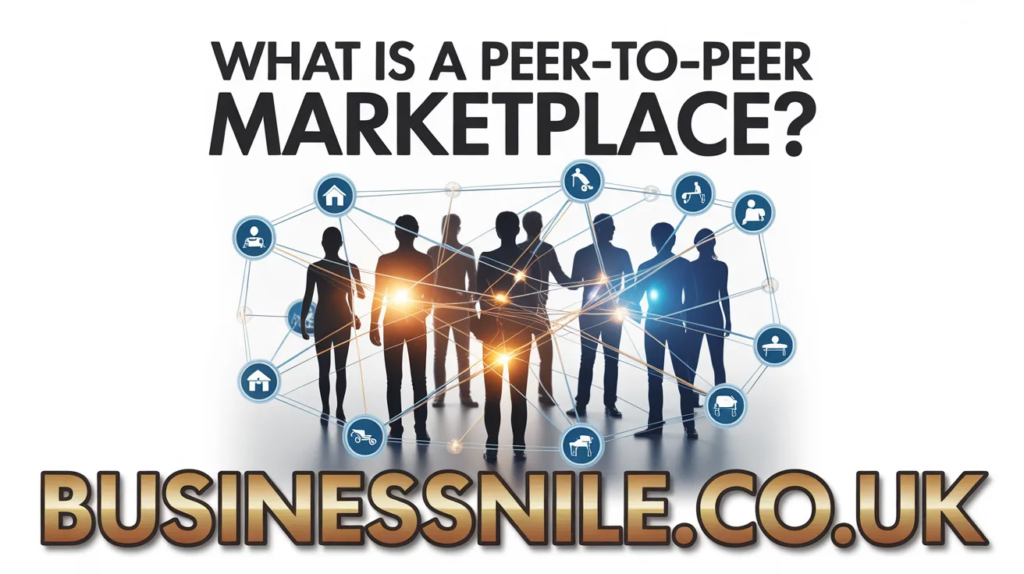
Every peer-to-peer marketplace involves three main parties:
- Sellers or Providers: Individuals who list products, services, or rentals on the platform.
- Buyers or Users: People who browse, book, or purchase from those listings.
- The Platform: The technology that connects both sides, handles payments, and enforces trust.
How Does a Peer-to-Peer Marketplace Work?
Understanding what is a peer-to-peer marketplace also means understanding the mechanics behind it. Here is how the process typically flows:
Step-by-Step: The P2P Transaction Journey
- A seller creates a profile and lists their product or service with a description, photos, and price.
- A buyer searches the platform and discovers the listing through filters, categories, or search.
- The buyer initiates a purchase or booking request.
- The platform processes the payment securely and holds funds in escrow.
- The seller delivers the product or service.
- The buyer confirms receipt and leaves a review.
- The platform releases funds to the seller, minus its commission or fee.
The whole process happens digitally, with the platform handling trust, security, and dispute resolution. That is why so many people feel comfortable buying from a stranger online through platforms like these.
Types of Peer-to-Peer Marketplaces You Should Know
Not all P2P platforms are built the same. They fall into several categories based on what is being exchanged.
Product Marketplaces
These platforms let individuals buy and sell physical goods. Examples include eBay, Etsy, and Craigslist. Sellers can list anything from handmade crafts to used electronics. Buyers get access to unique items they cannot find in regular stores.
Service Marketplaces
These connect people who need a service with individuals who provide one. Fiverr, Upwork, and TaskRabbit are popular examples. A writer in Pakistan can deliver work to a client in New York. A local handyman can find jobs in their city.
Rental and Sharing Marketplaces
These allow people to rent out assets they already own. Airbnb lets homeowners rent spare rooms. Turo lets car owners rent their vehicles. These platforms gave birth to the sharing economy, which helps people earn from underused assets.
Financial and Lending Marketplaces
P2P lending platforms like LendingClub connect individual borrowers with individual lenders, bypassing traditional banks. This gives borrowers access to loans and lenders a chance to earn interest.
Why Are Peer-to-Peer Marketplaces So Popular?
When I first researched P2P platforms, I was honestly surprised by how much they had grown. The reasons behind their popularity are not complicated. They solve real problems for real people.
Here is why buyers love them:
- Lower prices compared to retail stores.
- Access to unique, handmade, or rare items.
- A personal connection with the seller.
- Transparent reviews and ratings.
And here is why sellers love them:
- Low barrier to entry with no need for a physical store.
- Access to a large, built-in audience.
- Flexible working hours and location freedom.
- The ability to turn a hobby or skill into income.
Peer-to-Peer Marketplace vs Traditional E-Commerce: Key Differences
Many people confuse peer-to-peer marketplaces with regular e-commerce stores. They are not the same thing. Here is a clear comparison:
| Feature | P2P Marketplace | Traditional E-Commerce |
| Who sells? | Individual people | A business or company |
| Platform owns inventory? | No | Yes |
| Price set by? | Individual seller | The company |
| Scalability | Very high | Depends on stock |
| Revenue model | Commission or fees | Product margin |
Real-World Examples of Peer-to-Peer Marketplaces That Changed Everything
The best way to truly grasp what is a peer-to-peer marketplace is to look at the platforms you probably already use.
Airbnb
Airbnb launched in 2008 and completely disrupted the hotel industry. Homeowners list their spare rooms or entire properties. Travelers book directly from those homeowners. Airbnb takes a service fee from both parties. The company does not own a single room, yet it became one of the world’s largest hospitality businesses. what is a peer-to-peer marketplace?
eBay
eBay was one of the earliest P2P marketplaces, launched in 1995. It allowed everyday people to auction off items to other people. Today it serves 132 million active buyers worldwide. Sellers range from individuals clearing out their attic to small businesses selling refurbished electronics.
Etsy
Etsy focuses on handmade, vintage, and creative goods. It is a beautiful example of a niche P2P marketplace. Artisans from all over the world sell to buyers who want something unique and personal. Etsy reported over 96 million active buyers in recent years, proving that niche P2P platforms can achieve massive scale.
Upwork and Fiverr
These platforms transformed how people hire for professional services. A freelance graphic designer in Karachi can now work for a startup in California without leaving home. Clients post jobs or browse profiles, hire directly, and pay through the platform. The gig economy now employs hundreds of millions of people globally, and P2P service platforms are at the heart of it.
The Real Benefits of Peer-to-Peer Marketplaces for Buyers and Sellers
When you understand what is a peer-to-peer marketplace fully, you see why both sides of the transaction benefit enormously.
For Buyers
- Better prices: You skip the retail markup and buy directly from the source.
- Wider selection: You can find products and services that do not exist in any traditional store.
- Transparent trust signals: Reviews, ratings, and profiles give you confidence in who you are buying from.
- Convenience: You can shop, book, or hire from anywhere, at any time.
For Sellers
- Zero inventory costs for digital or service products.
- Built-in audience so you do not need to build traffic from scratch.
- Payment protection through the platform’s secure escrow system.
- Global reach so you can sell to customers in any country.
The Real Challenges of Peer-to-Peer Marketplaces (And How They Solve Them)
No model is perfect. Peer-to-peer marketplaces face some genuine challenges that every operator and user should understand.
Trust and Safety
Buying from a stranger always carries some risk. P2P platforms manage this through verified profiles, review systems, identity checks, and dispute resolution teams. The best platforms invest heavily in safety to protect their reputation.
Quality Control
When anyone can sell, quality can vary widely. Platforms address this with rating systems, quality badges, seller tiers, and strict listing policies. Buyers learn to check reviews carefully before purchasing.
Regulatory Issues
Some P2P marketplaces have faced government pushback. Airbnb has been restricted in several cities due to housing concerns. Uber faced legal battles over driver classification. Navigating local regulations is one of the biggest hurdles for P2P platform operators.
How to Build Your Own Peer-to-Peer Marketplace: A Starter Roadmap
If you are an entrepreneur, understanding what is a peer-to-peer marketplace opens up a real business opportunity. Here is a basic roadmap to get you started:
- Choose your niche: Do not try to compete with eBay on day one. Find a specific, underserved audience.
- Define your revenue model: Will you charge a commission, a listing fee, a subscription, or a combination?
- Build trust mechanisms: Invest in reviews, identity verification, and a solid refund policy from day one.
- Solve the cold start problem: Attract your first sellers before you go public. Empty shelves scare buyers away.
- Choose the right technology: You can build from scratch or use marketplace-specific platforms like Sharetribe or Arcadier.
- Launch, learn, and iterate: P2P marketplaces grow with their communities. Listen to your users and improve constantly.
The Future of Peer-to-Peer Marketplaces: What Is Coming Next?
The P2P marketplace model keeps evolving. Several powerful trends are shaping its next phase.
- Blockchain and decentralization: New platforms are experimenting with blockchain to create trustless P2P transactions with no central authority needed.
- AI-powered matching: Platforms are using artificial intelligence to better connect buyers with the most relevant sellers.
- Hyper-niche platforms: Instead of large generalist platforms, we are seeing more specialized marketplaces for very specific communities.
- Social commerce integration: P2P marketplaces are blending with social media, allowing sellers to build audiences and sell through community-driven feeds.
The core question, what is a peer-to-peer marketplace, may stay the same. But the answer will keep getting richer and more complex as technology advances.
Conclusion: Why Peer-to-Peer Marketplaces Matter More Than Ever
By now, you have a clear and complete picture of what is a peer-to-peer marketplace. It is not just a website where people sell things. It is a fundamentally different way of doing business, one that puts individuals at the center, removes unnecessary intermediaries, and creates value for both sides of every transaction.
Whether you are a buyer looking for better deals, a seller hoping to earn from your skills or assets, or an entrepreneur with a business idea, the P2P marketplace model offers something valuable for you.
The sharing economy is not slowing down. In fact, it is accelerating. More people want ownership alternatives. More individuals want flexible income. More buyers want authentic, personal purchases. Peer-to-peer marketplaces are built to deliver all of that.
Have you used a peer-to-peer marketplace recently? What was your experience like? Share your thoughts in the comments below, or pass this article along to someone thinking about starting their own platform.
Frequently Asked Questions (FAQs)
1. What is a peer-to-peer marketplace in simple terms?
A peer-to-peer marketplace is an online platform that lets individuals buy and sell directly from each other without a company acting as the seller. The platform simply facilitates the transaction.
2. Is Amazon a peer-to-peer marketplace?
Not entirely. Amazon sells its own products as a traditional retailer but also runs Amazon Marketplace, where third-party sellers list their goods. The Marketplace portion is closer to a P2P model, but Amazon itself is not a pure peer-to-peer platform.
3. How do peer-to-peer marketplaces make money?
Most P2P platforms earn through transaction commissions, listing fees, premium memberships, advertising, or featured placement. Airbnb charges a percentage of each booking. Etsy charges listing and transaction fees.
4. Is peer-to-peer selling safe?
It depends on the platform. Reputable P2P marketplaces use identity verification, secure payments, escrow, buyer protection policies, and review systems to reduce risk. Always check a platform’s trust and safety features before transacting.
5. What is the difference between a P2P marketplace and a B2C marketplace?
A P2P (peer-to-peer) marketplace connects individuals to individuals. A B2C (business-to-consumer) marketplace connects businesses to consumers. In a P2P platform, the sellers are regular people. In a B2C platform, the sellers are companies.
6. What are the most successful peer-to-peer marketplaces?
Some of the most successful ones include Airbnb (rentals), eBay (products), Etsy (handmade goods), Fiverr and Upwork (services), LendingClub (lending), and Turo (car rentals). Each dominates a specific niche.
7. Can I start my own peer-to-peer marketplace?
Yes, absolutely. Many entrepreneurs have built successful niche P2P platforms. You need a clear niche, a revenue model, trust tools, and the right technology. Platforms like Sharetribe make it easier to launch without building from scratch.
8. What is the sharing economy and how does it relate to P2P marketplaces?
The sharing economy refers to economic activity where individuals share access to goods, services, and resources. Peer-to-peer marketplaces are the platforms that power the sharing economy. Airbnb and Turo are classic examples where underused assets get shared for profit.
9. Do P2P marketplaces work globally?
Yes, most major P2P marketplaces operate internationally. However, local regulations, currency differences, and shipping logistics can create challenges. Many platforms localize their offerings to serve specific regions more effectively.
10. What trends are shaping the future of peer-to-peer marketplaces?
Key trends include blockchain-based decentralized platforms, AI-powered buyer-seller matching, hyper-niche community marketplaces, and deeper integration with social media and mobile commerce. The P2P model continues to evolve rapidly.
Also Read In BusinessNile.co.uk
Email: johanharwen314@gmail.com
Author Name: Hamid Ali
About the Author: Hamid Ali is a digital commerce strategist and content writer with over eight years of experience covering e-commerce, marketplace platforms, and the sharing economy. He has helped startups and established businesses understand emerging marketplace trends and build strategies that convert. Hamid writes with a focus on clarity, practicality, and real-world application, making complex business models accessible to readers at every level. When he is not writing, he is researching the next big shift in online commerce.