What Is One Way for an Entrepreneur to Decrease Risk? The Proven Path In 2026

Introduction
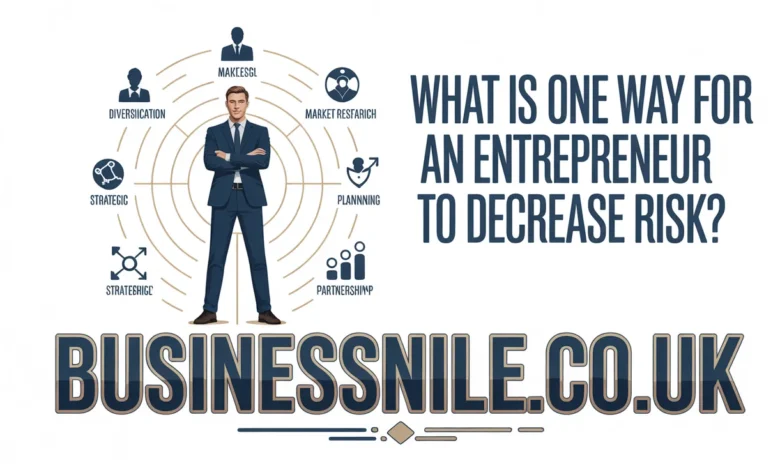
Every entrepreneur knows the feeling. You have a bold idea, a clear vision, and the drive to make it happen. But somewhere in the back of your mind, a quiet question lingers: what is one way for an entrepreneur to decrease risk? It is one of the most searched and most urgent questions in the business world, and for good reason.
Starting or running a business is never risk-free. Markets shift. Competition shows up. Capital runs dry. Customers change their minds. The list of things that can go wrong is long, and anyone who tells you otherwise is not being honest.
But here is the good news. While you cannot eliminate risk completely, you absolutely can manage it. And the single most powerful answer to the question what is one way for an entrepreneur to decrease risk? is this: market research and business validation before you commit.
This article covers what that really means, why it works, how to do it, and what happens when you skip it. Whether you are just starting out or already running a business, this guide gives you a practical framework for making smarter, safer decisions.
Why Risk Is the Biggest Challenge for Entrepreneurs
[Image: Split image showing two paths: one leading to a thriving business, the other to a closed sign, symbolizing the impact of risk decisions.]
Risk is not just a financial concern. It touches every part of your business. From choosing the wrong product to hiring the wrong team, from entering the wrong market to spending money on the wrong marketing channel, risk is everywhere.
According to data from the U.S. Bureau of Labor Statistics, roughly 20% of new businesses fail within the first year. By the fifth year, that number climbs to nearly 50%. These are not just statistics. They represent real people who took real chances and lost time, money, and energy.
Understanding this reality is not meant to scare you. It is meant to help you take risk seriously, because when you do, you can actually do something about it.

The Most Common Risks Entrepreneurs Face
- Market risk: Launching a product nobody wants
- Financial risk: Running out of cash before profitability
- Competitive risk: Entering a market dominated by established players
- Operational risk: Building a team or process that cannot scale
- Regulatory risk: Ignoring legal requirements in your industry
Each of these risks is real. But each can also be reduced with the right approach.
What Is One Way for an Entrepreneur to Decrease Risk? Market Research
[Image: An entrepreneur conducting customer interviews in a coffee shop, taking detailed notes, with a laptop open showing survey data.]
If you want a single, actionable, research-backed answer to what is one way for an entrepreneur to decrease risk, it is this: validate your idea before you fully invest in it.
Market research and early validation give you real data. They replace assumptions with facts. They show you whether a real demand exists for your product or service, before you spend years building something the market does not want.
This approach has been backed by some of the most successful startup methodologies in the world. The Lean Startup method, developed by Eric Ries, is built entirely on this principle. Test first. Learn fast. Adjust before it is too late.
Validation is not complicated. It does not require a large budget or a team of researchers. It requires curiosity, discipline, and a willingness to hear the truth, even when it is uncomfortable.
What Does Validation Actually Look Like?
Validation means gathering evidence that your business idea has real demand. Here are the most effective methods:
- Talk to potential customers directly: Ask them about their problems, not your solutions.
- Run a landing page test: Create a simple page describing your offer and see how many people sign up.
- Pre-sell your product: If people pay before you build it, you know demand is real.
- Conduct competitor analysis: Study who is already succeeding in your space and why.
- Survey your target audience: Use tools like Typeform or Google Forms to gather structured feedback.
Each of these methods costs far less than building a full product and launching it to silence. And together, they give you a clear picture of whether your idea can survive in the real world.
Why Validation Works: The Data Behind the Strategy
You might be thinking, I already know my idea is good. I have been thinking about it for months. But research consistently shows that founder confidence is not a reliable predictor of business success.
A study by CB Insights analyzing over 110 failed startups found that 42% of them failed because there was no market need for their product. Not because of bad execution. Not because of poor funding. Simply because nobody wanted what they built.
That is a painful and preventable failure. Validation catches this early. It forces you to answer the hardest question in business before you sink your resources into it: does anyone actually want this?
Real-World Example: Dropbox
Before building the full product, Dropbox founder Drew Houston created a simple explainer video. It described the product and what it could do. He posted it online to gauge interest. Overnight, sign-ups went from 5,000 to 75,000 people.
That video was not marketing. It was validation. It proved demand existed before a single line of real code was written for the consumer version of the product.
This is exactly what it looks like when an entrepreneur decreases risk smartly. You invest in learning before you invest in building.
Other Smart Ways to Decrease Entrepreneurial Risk
[Image: A business owner reviewing a financial plan and risk management chart with a financial advisor in a bright modern office.]
While validation is the most powerful answer to what is one way for an entrepreneur to decrease risk, it is worth understanding other complementary strategies that make your business even more resilient.
Start Small and Test Before You Scale
Many entrepreneurs make the mistake of going all-in too fast. They hire a full team, rent office space, and spend heavily on marketing before they have proven anything. A smarter approach is to start lean.
Launch a minimum viable product, or MVP. Serve a small group of customers first. Gather feedback. Improve. Then scale. This approach limits your downside while keeping your upside intact.
Diversify Your Revenue Streams
Relying on a single customer, product, or income stream is a major source of risk. When that one thing fails, everything fails with it. Entrepreneurs who build multiple revenue streams create a buffer against unpredictable losses.
This could mean offering different product tiers, serving different customer segments, or adding a service layer to a product-based business. Diversity is protection.
Build a Financial Cushion
Cash flow problems are one of the top reasons businesses fail. Even profitable businesses can collapse if they run out of cash at the wrong time. Keeping three to six months of operating expenses in reserve gives you the breathing room to survive difficult periods.
I always recommend that entrepreneurs treat their financial cushion like a non-negotiable expense, not a luxury. It is the difference between surviving a hard quarter and closing your doors.
Build the Right Team Early
The people you surround yourself with directly impact your risk level. Hiring too fast, or choosing the wrong partners, creates operational and financial risk that compounds over time.
Take your time with hiring. Look for people who complement your weaknesses. And always, always check references.
Get a Mentor or Join a Community
One of the most underrated ways to reduce risk is to learn from someone who has already made the mistakes you are about to make. A good mentor can help you avoid costly errors and see blind spots you cannot see yourself.
Communities like YCombinator’s Startup School, local entrepreneur networks, or even active online forums can provide the same benefit at no cost.
What Is One Way for an Entrepreneur to Decrease Risk in Different Stages?
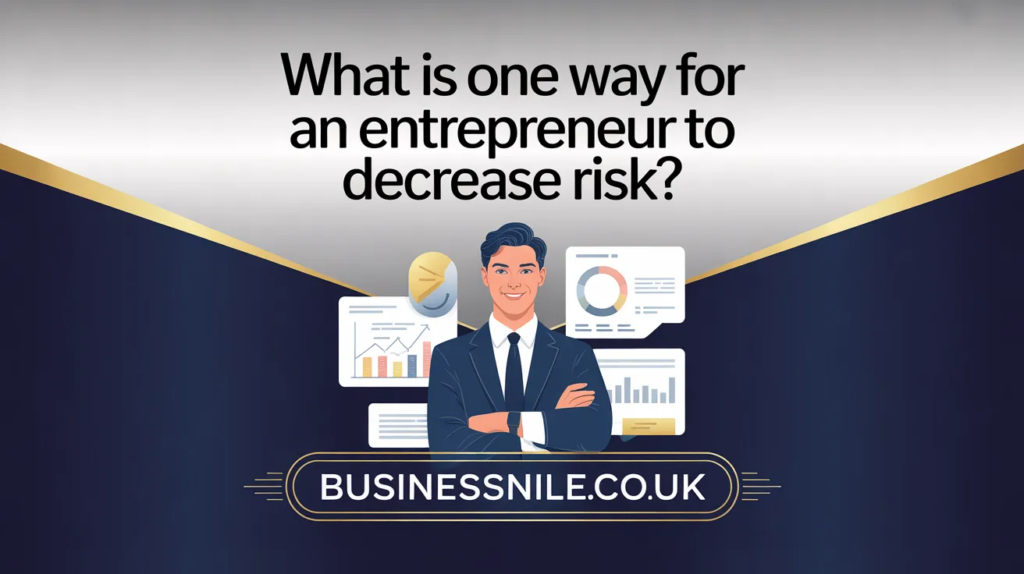
The answer to this question also depends on where you are in your entrepreneurial journey. Risk looks different at each stage.
Early Stage: Ideation and Validation
At this stage, the biggest risk is building something nobody wants. The best strategy here is customer discovery. Talk to as many potential customers as possible. Do not pitch. Listen. Ask about their biggest frustrations and how they currently solve them.
Growth Stage: Operations and Scaling
At this stage, risk shifts to operational complexity. Systems that worked when you had five customers will not work with five hundred. Invest in processes, automation, and strong management before you scale.
Mature Stage: Competition and Disruption
At this stage, the risk comes from complacency. Successful businesses often get comfortable and stop innovating. Keep researching your market. Keep listening to customers. Keep testing new ideas.
How to Apply This to Your Business Right Now
[Image: An entrepreneur writing in a notebook with the words ‘Validate. Test. Grow.’ highlighted, surrounded by business books and a cup of coffee.]
Knowing the answer to what is one way for an entrepreneur to decrease risk is only useful if you act on it. Here is a simple action plan you can start today:
- Write down your top three assumptions about your business idea.
- Design a simple test for each assumption. A survey, a landing page, or five customer conversations.
- Run those tests within the next two weeks.
- Review what you learned. Adjust your plan based on real feedback, not wishful thinking.
- Repeat this process every time you are about to make a major business decision.
This loop of testing and learning does not end when you launch. The best entrepreneurs keep doing this for the life of their business. It is how they stay ahead.
Frequently Asked Questions
1. What is one way for an entrepreneur to decrease risk in a new business?
The most effective way is to validate your business idea before fully committing to it. Conduct customer interviews, run landing page tests, and pre-sell your product whenever possible. This replaces costly assumptions with real market data.
2. How does market research help entrepreneurs reduce risk?
Market research reveals whether real demand exists for your product or service. It helps you understand your target customer, identify competitors, and spot gaps in the market. This information reduces the chance of investing in something the market does not want.
3. Is validation only useful for new businesses?
No. Validation is valuable at every stage of business. Before launching a new product, entering a new market, or making a major operational change, testing your assumptions first can save significant time and money.
4. What is the Lean Startup method and how does it decrease risk?
The Lean Startup method, developed by Eric Ries, encourages entrepreneurs to build a minimum viable product, measure customer response, and learn from the results. This cycle reduces risk by ensuring you never build more than what the market has confirmed it wants.
5. Can a business be completely risk-free?
No business is completely risk-free. However, with validation, diversification, financial planning, and strong team-building, you can significantly reduce the risks that are most likely to cause failure.
6. What is the most common reason startups fail?
According to CB Insights, the most common reason is no market need, cited by 42% of failed startups. This is a direct result of skipping the validation process and building a product without confirming that customers actually want it.
7. How can an entrepreneur reduce financial risk specifically?
Keep overhead low in the early stages. Build a cash reserve of three to six months of operating expenses. Avoid taking on debt before you have proven revenue. Diversify your income streams so no single customer or product represents your entire livelihood.
8. What role does a mentor play in reducing entrepreneurial risk?
A mentor provides experience and perspective that can help you avoid common mistakes. They can warn you about pitfalls they have already encountered and guide you toward better decisions. Access to a good mentor is one of the fastest ways to accelerate learning and reduce costly errors.
9. What is one way for an entrepreneur to decrease risk when entering a competitive market?
Thorough competitor research is key. Study your competitors deeply. Understand what they do well, where they fall short, and what customers wish they offered. Then position your business to fill that gap clearly and compellingly.
10. How often should entrepreneurs revisit their risk management strategy?
At minimum, review your risk strategy quarterly. Markets change, customer needs evolve, and new competitors emerge. Regular review keeps your strategy current and your business protected.
Conclusion
So, what is one way for an entrepreneur to decrease risk? The answer is clear: validate your idea with real market data before you go all in.
This single strategy is responsible for saving countless businesses from expensive, preventable failure. It shifts the odds in your favor. It gives you confidence that is rooted in evidence, not optimism. And it builds a foundation that every other part of your business can grow from safely.
Pair validation with financial discipline, a strong team, revenue diversification, and continuous learning, and you create a business that does not just survive risk but learns to use it as an advantage.
The most successful entrepreneurs are not the ones who take the biggest risks. They are the ones who take the smartest risks. And smart risk starts with knowing your market before your market knows you.
Now it is your turn. What assumption about your business have you been treating as fact without testing it? Start there. The answer might surprise you, and save you at the same time.
Also Read In BusinessNile.co.uk
Email: johanharwen314@gmail.com
Author Name: Hamid Ali
About the Author: Hamid Ali is a business strategist, entrepreneur, and writer with over a decade of experience helping founders and small business owners build resilient, sustainable companies. He has advised startups across multiple industries, from SaaS to retail, guiding them through the challenges of early-stage growth, market validation, and risk management. John writes regularly on topics including entrepreneurship, strategic planning, and business psychology. When he is not writing or consulting, he enjoys mentoring first-time founders and helping them navigate the realities of building something from nothing.